Process
Mini Wetland Diorama
Background
I was the Artist in Residence for 2020/21 at The Discovery Center at Murfree Spring in Murfreesboro, TN, which entailed designing and leading three months of weekly art-focused programming, and creating a piece for the museum’s permanent collection.

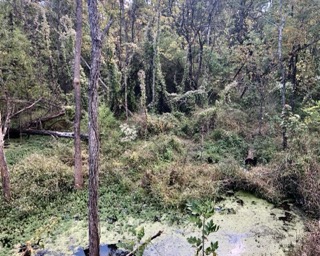 Educators at “The DC” regularly take groups of 6-13 year olds on nature walks through the wetland that surrounds The Discovery Center. I noticed it was difficult to draw each child’s attention to specific examples or details of wetland ecology, especially as more and more of the wetland gets obscured by invasive kudzu and duckweed.
Project Goals
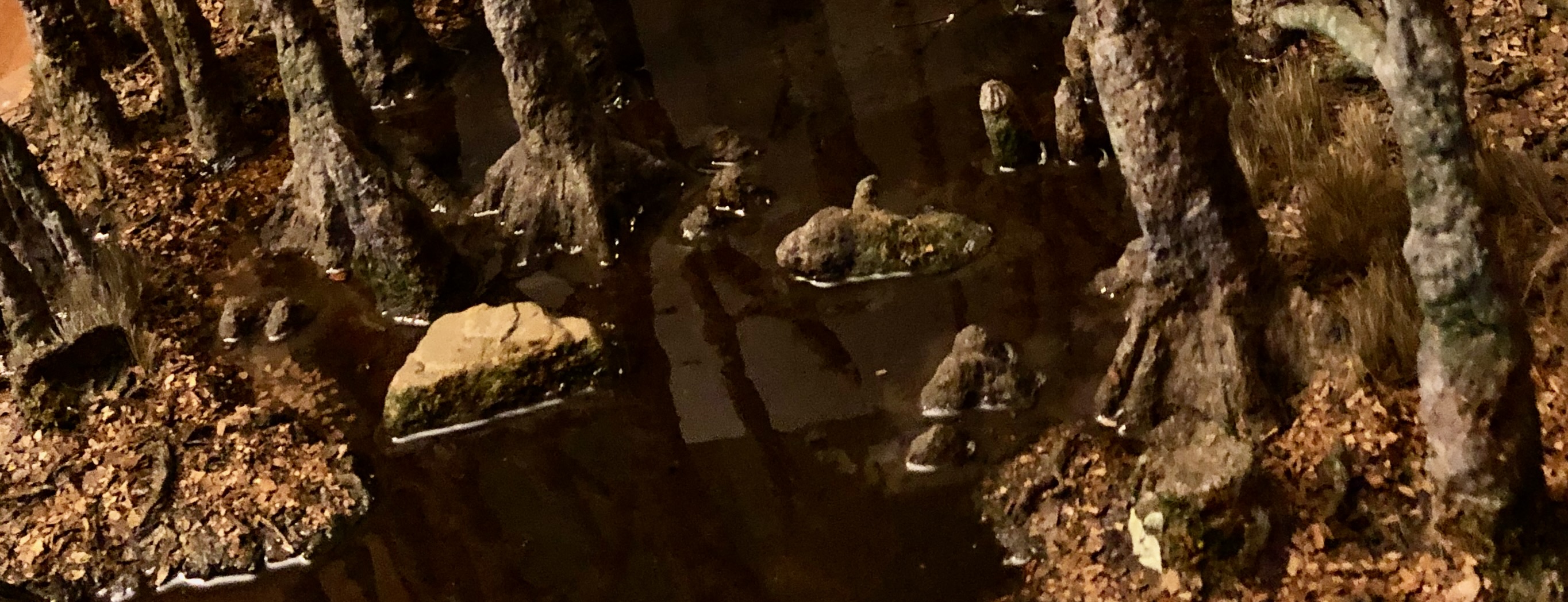
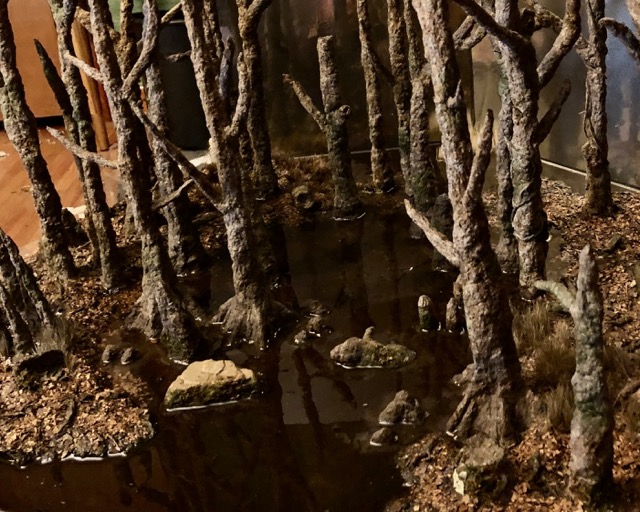 I created a small-scale diorama of the local wetland that showcases visually legible examples of subjects covered during the nature walk in a simplified setting.
Viewer Engagement
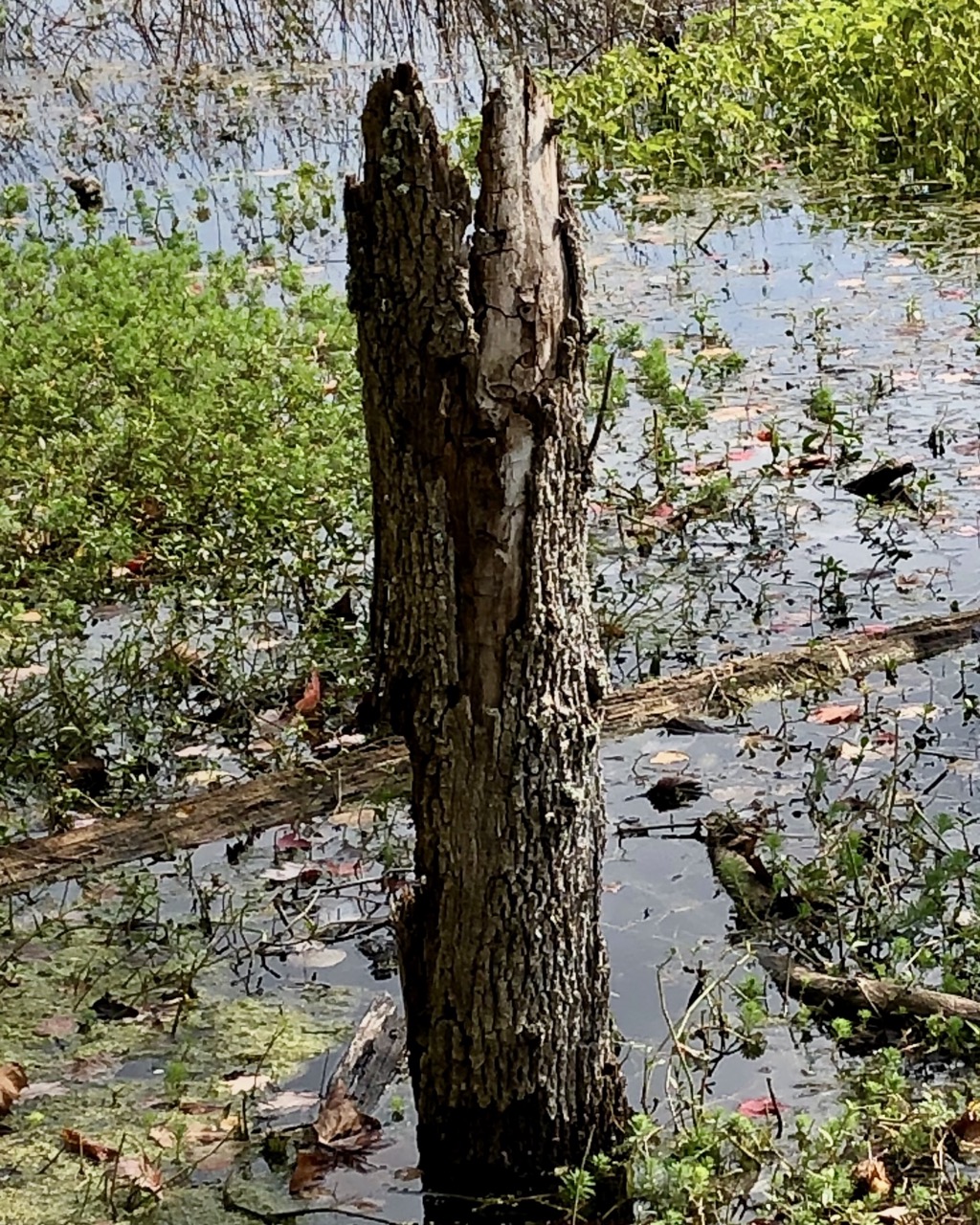
Like during nature walks, I expected viewers could have difficulty focusing on any particular detail within the diorama, especially from a distance. In order to promote closer viewing and deeper exploration of details, I set the diorama inside a hollow tree stump with a crack in the bark.
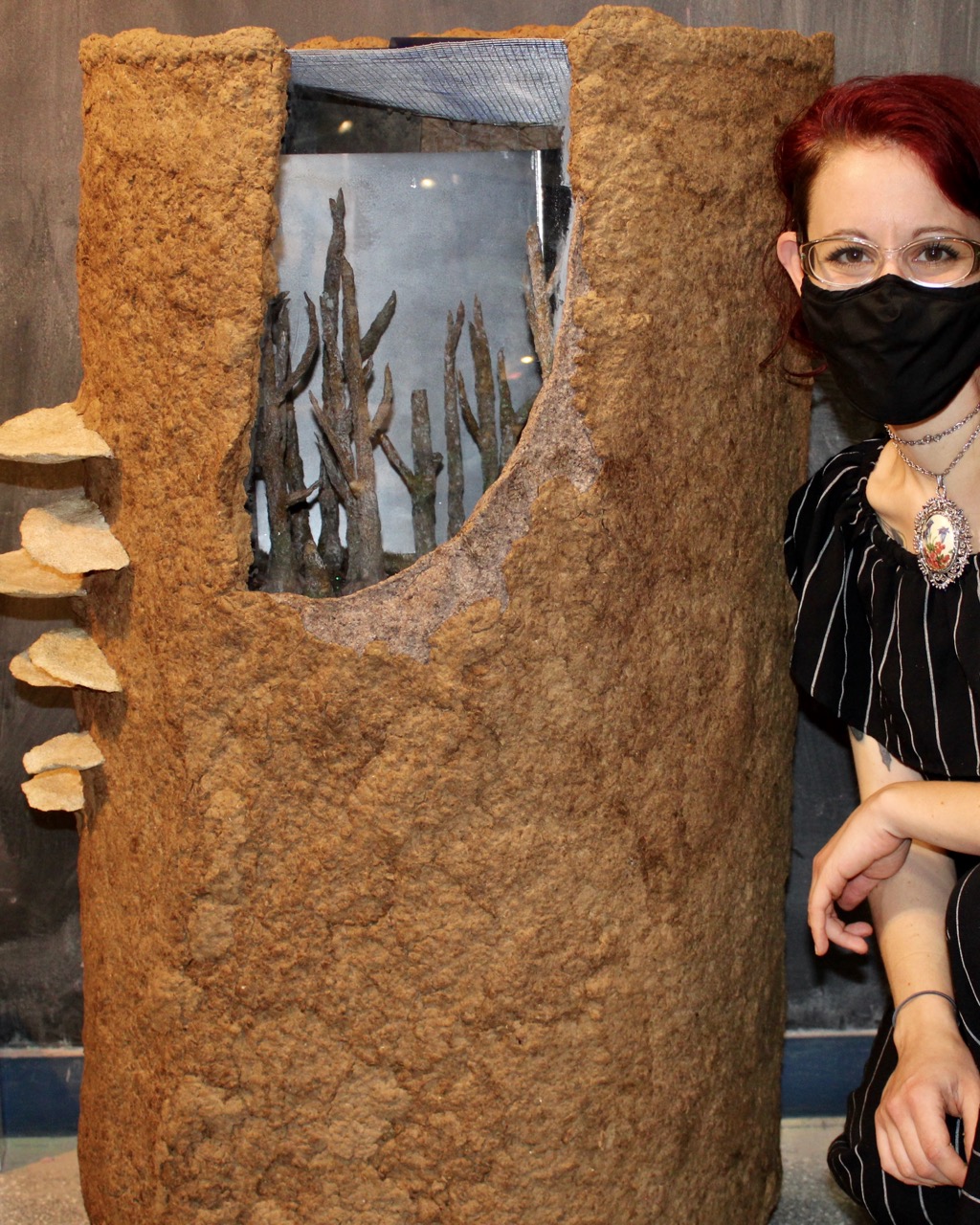
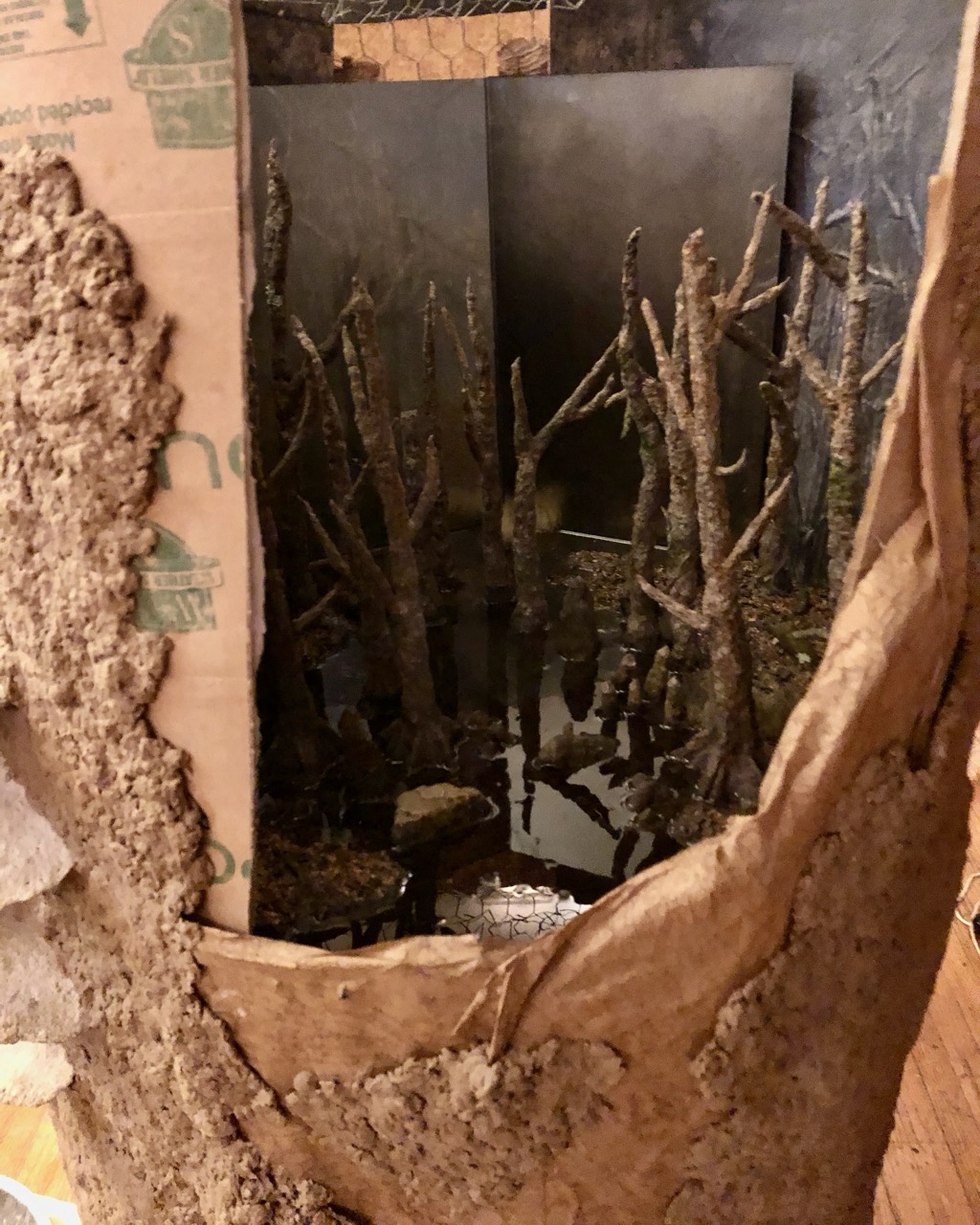
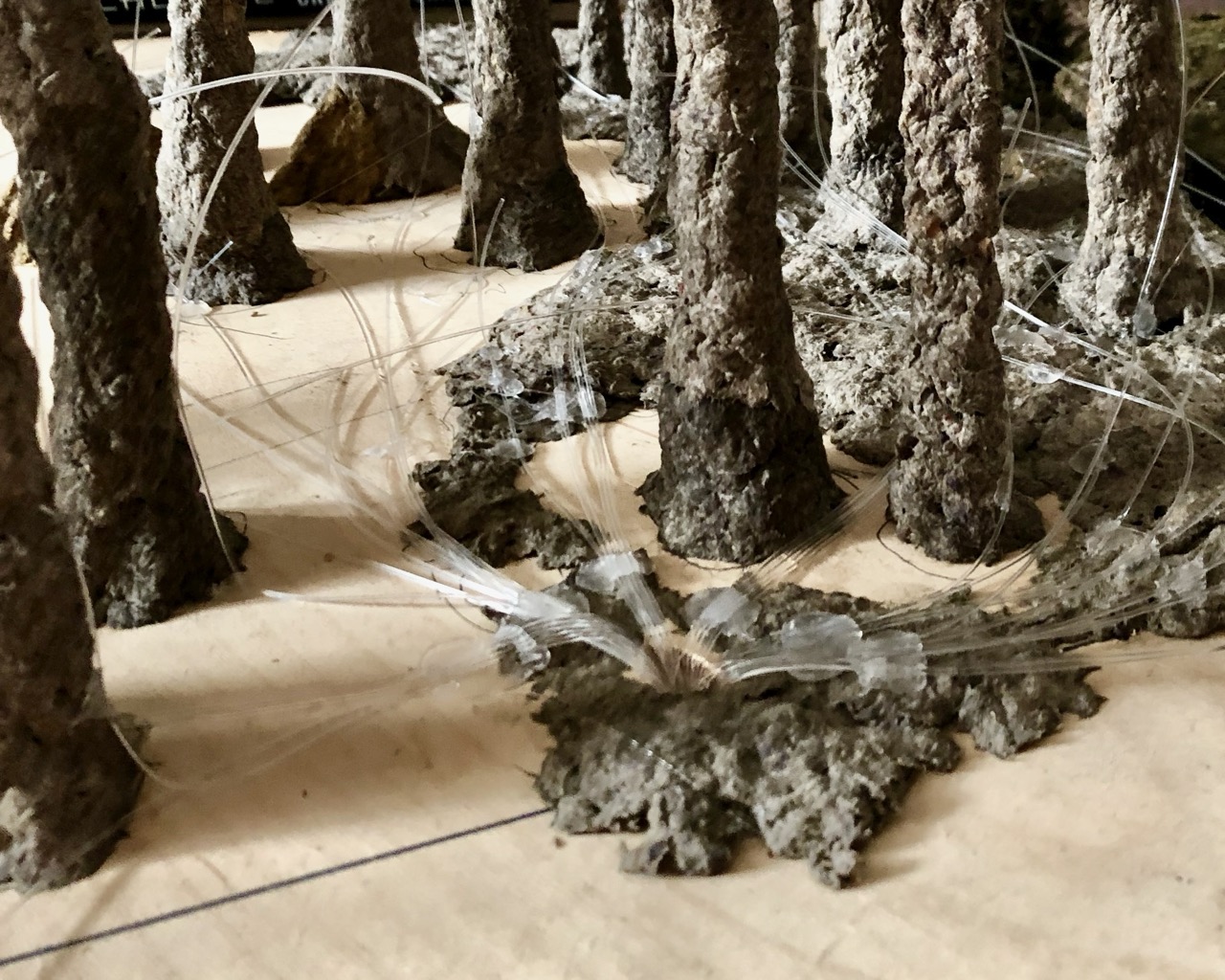
To hold viewers’ attention and encourage them to look more closely around the diorama, I added the illusion of fireflies in the wetland. Fireflies are usually summer bugs, but museum educators agreed that the immediate viewer impact (and sheer whimsy) warranted inclusion in this winter scene.
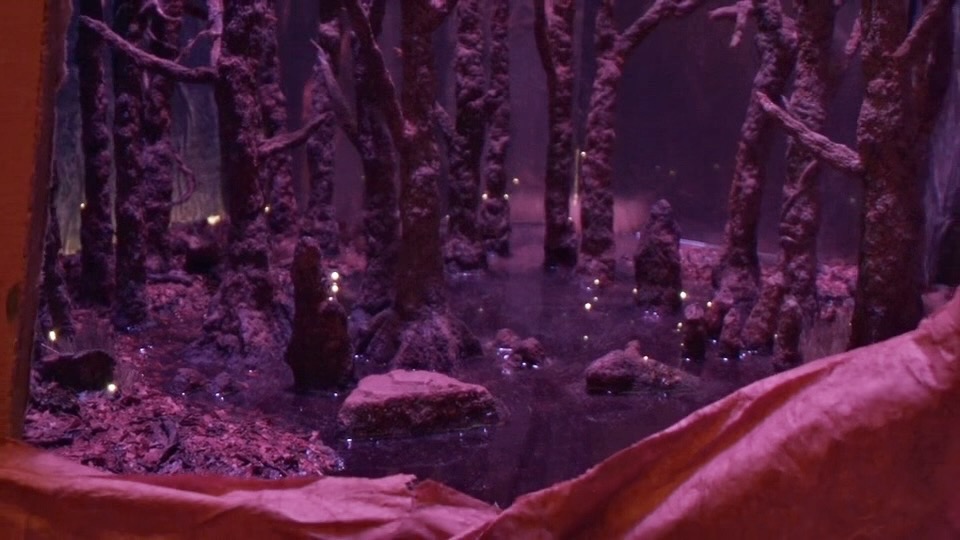
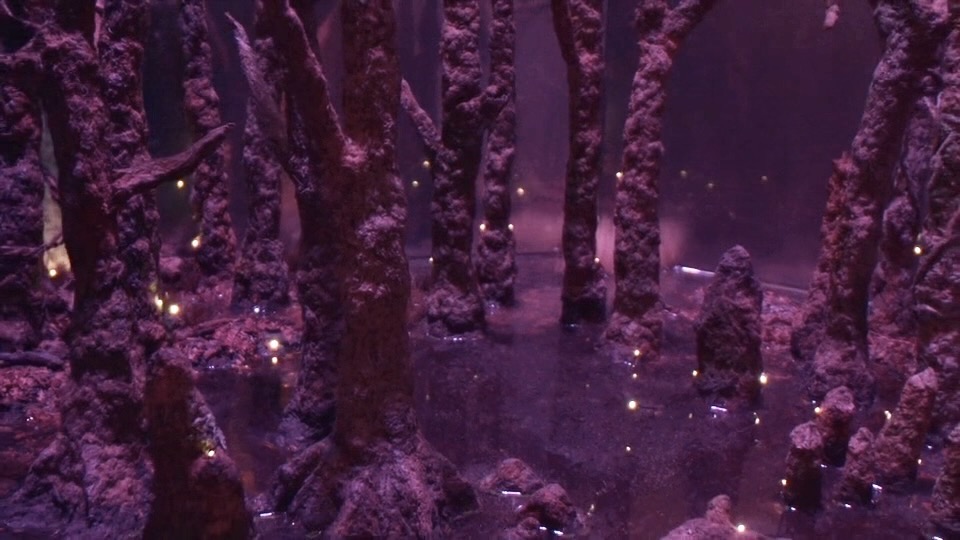
When you get close to look inside the tree, it feels like you’re wandering through a tiny wetland at twilight, your attention drawn through the landscape by twinkling fireflies.
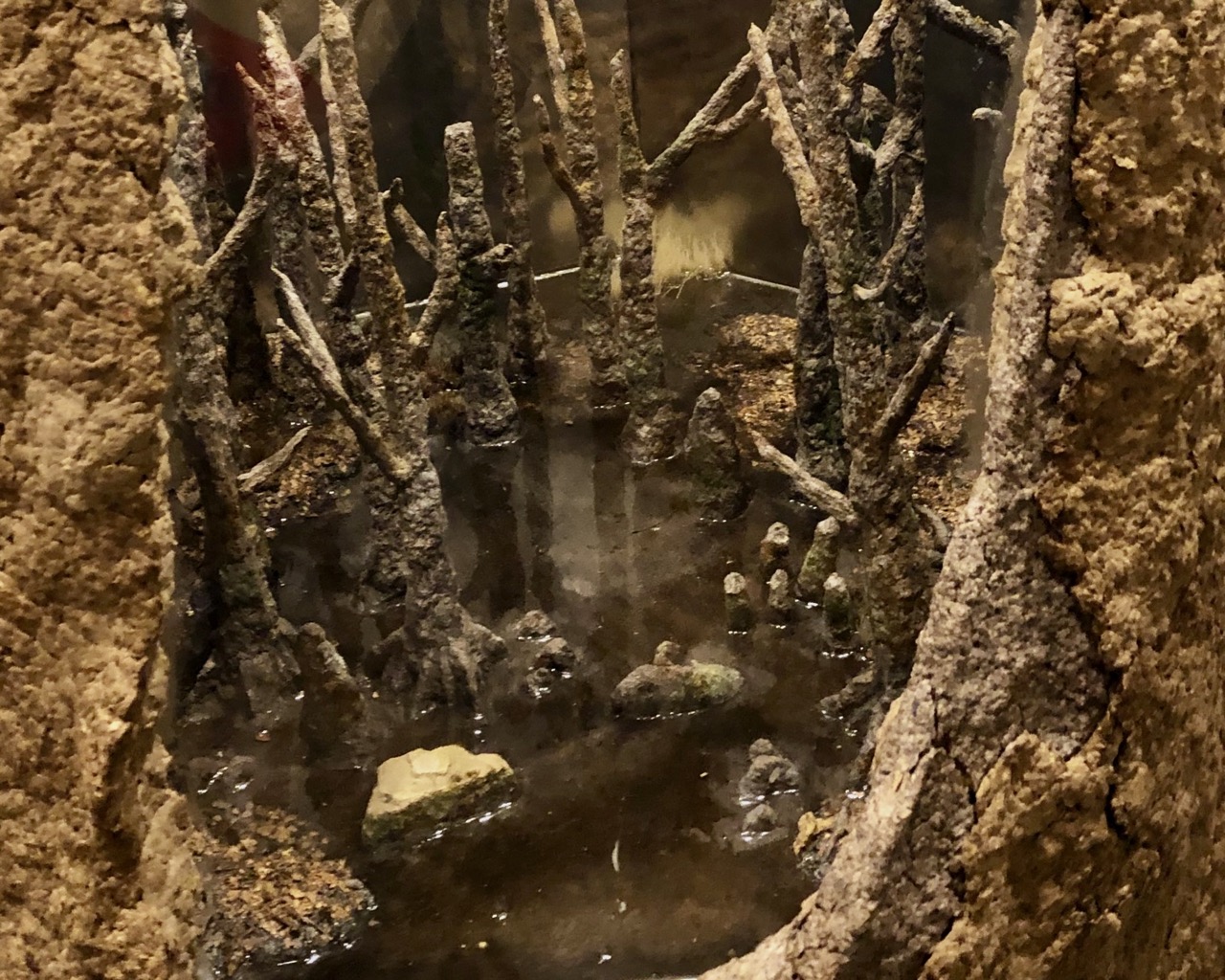
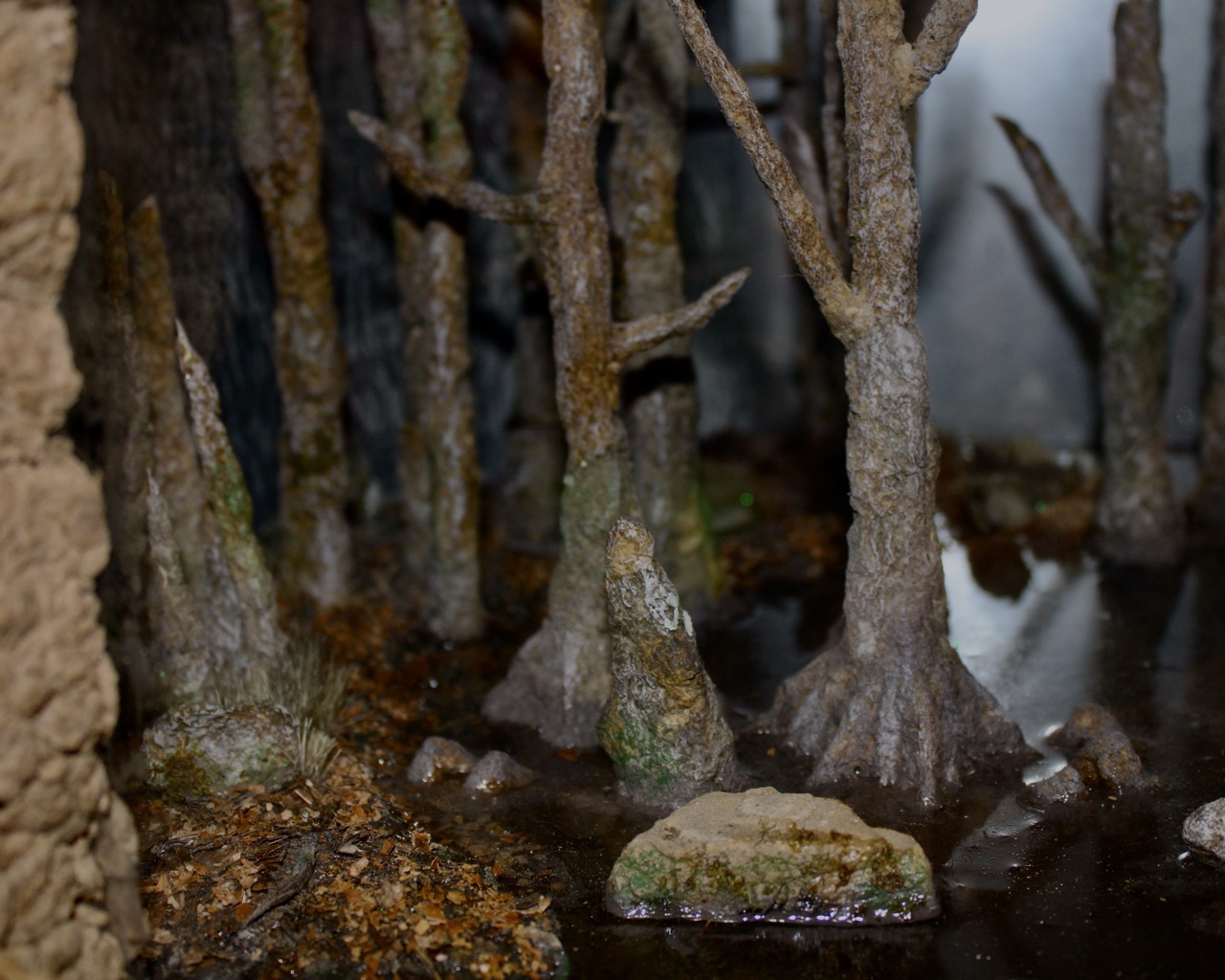
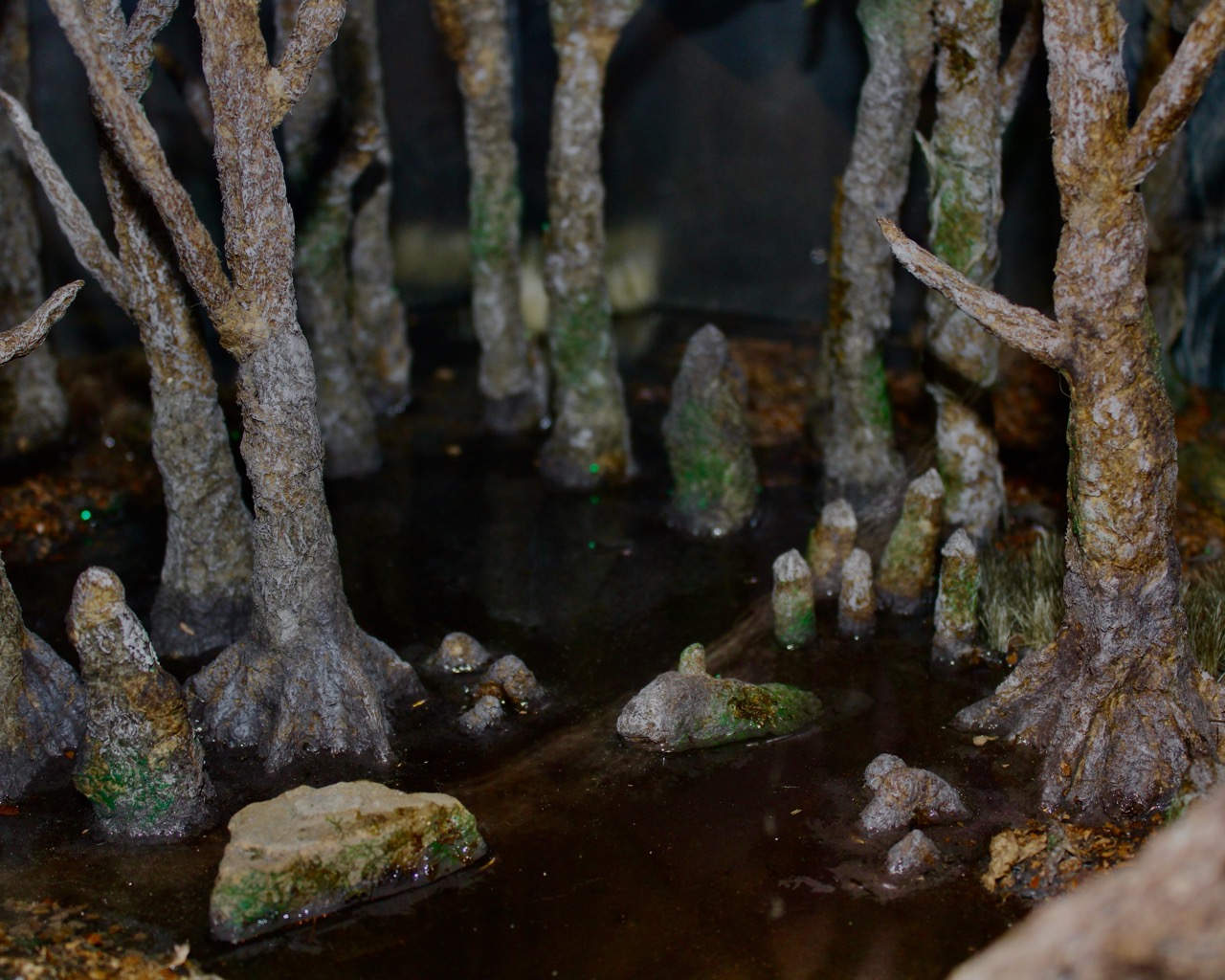
I was proud of my work, but it was viewers’ reactions that assured me of the result: kids, parents, and staff taking turns to peer into the world in the hollow tree, eyes wide, inching closer as they discover more to see.
Fabrication Process
Material Choices
Environmental responsibility is essential to The Discovery Center’s values, so I chose homemade paper clay from recycled packaging as my primary material.
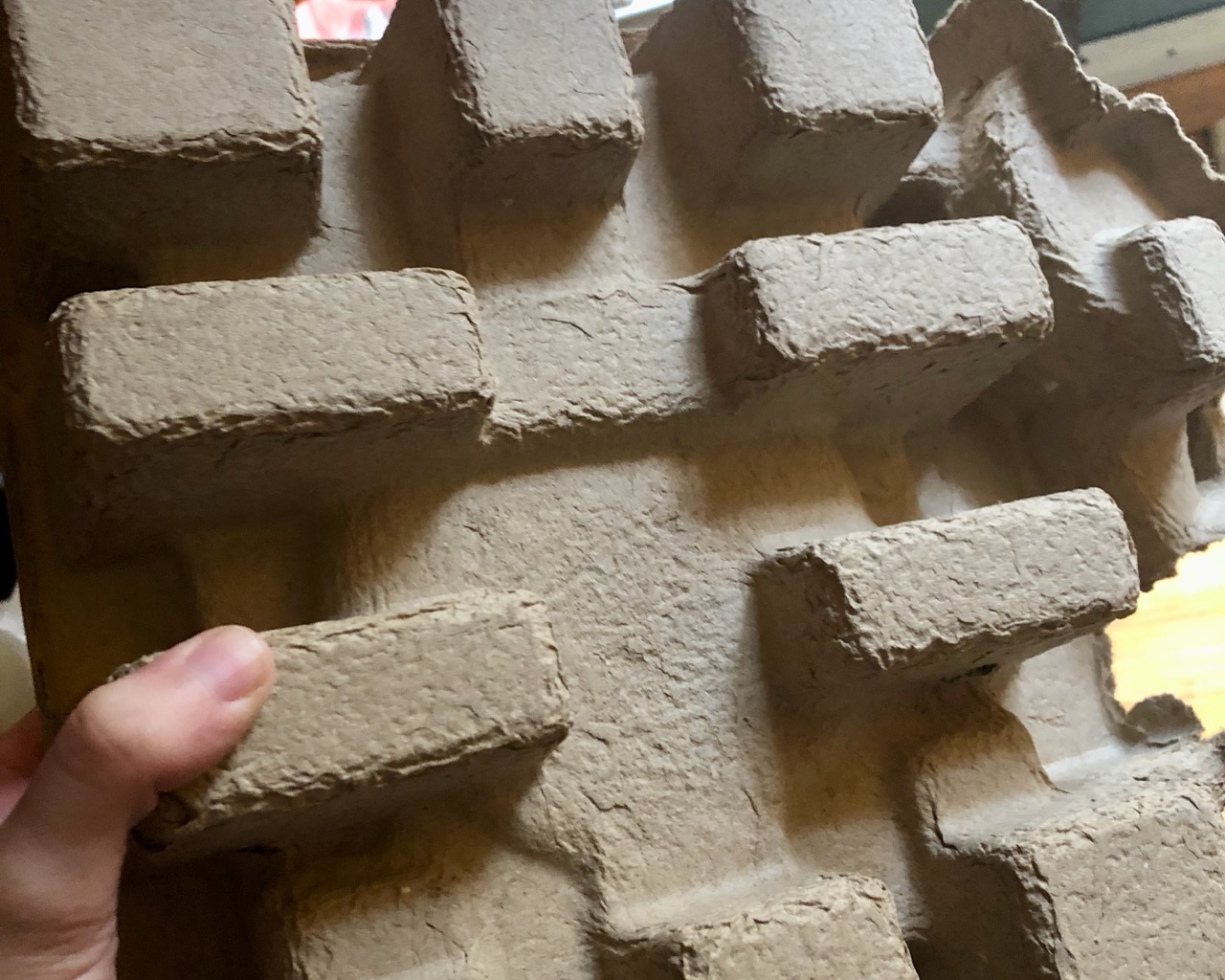
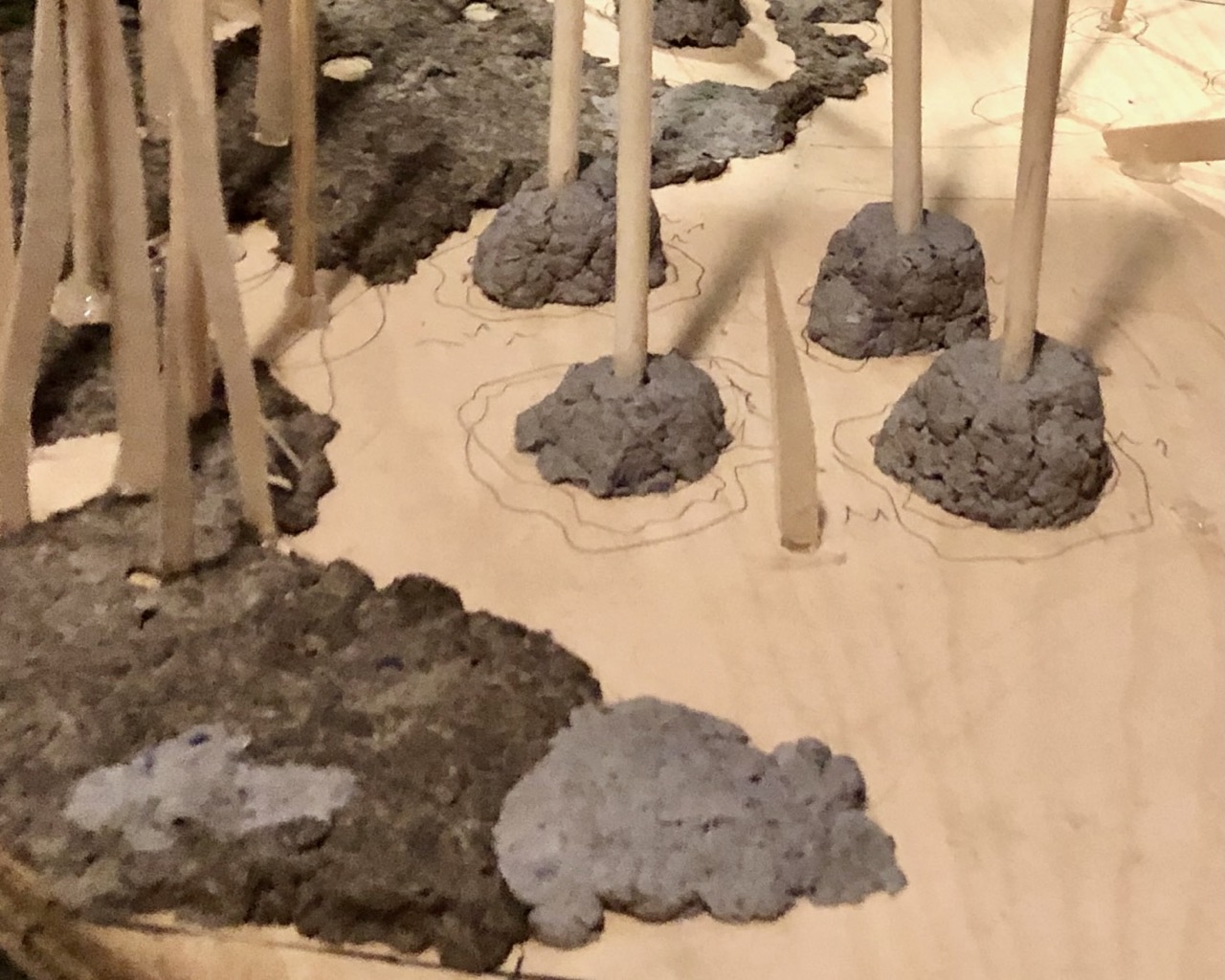
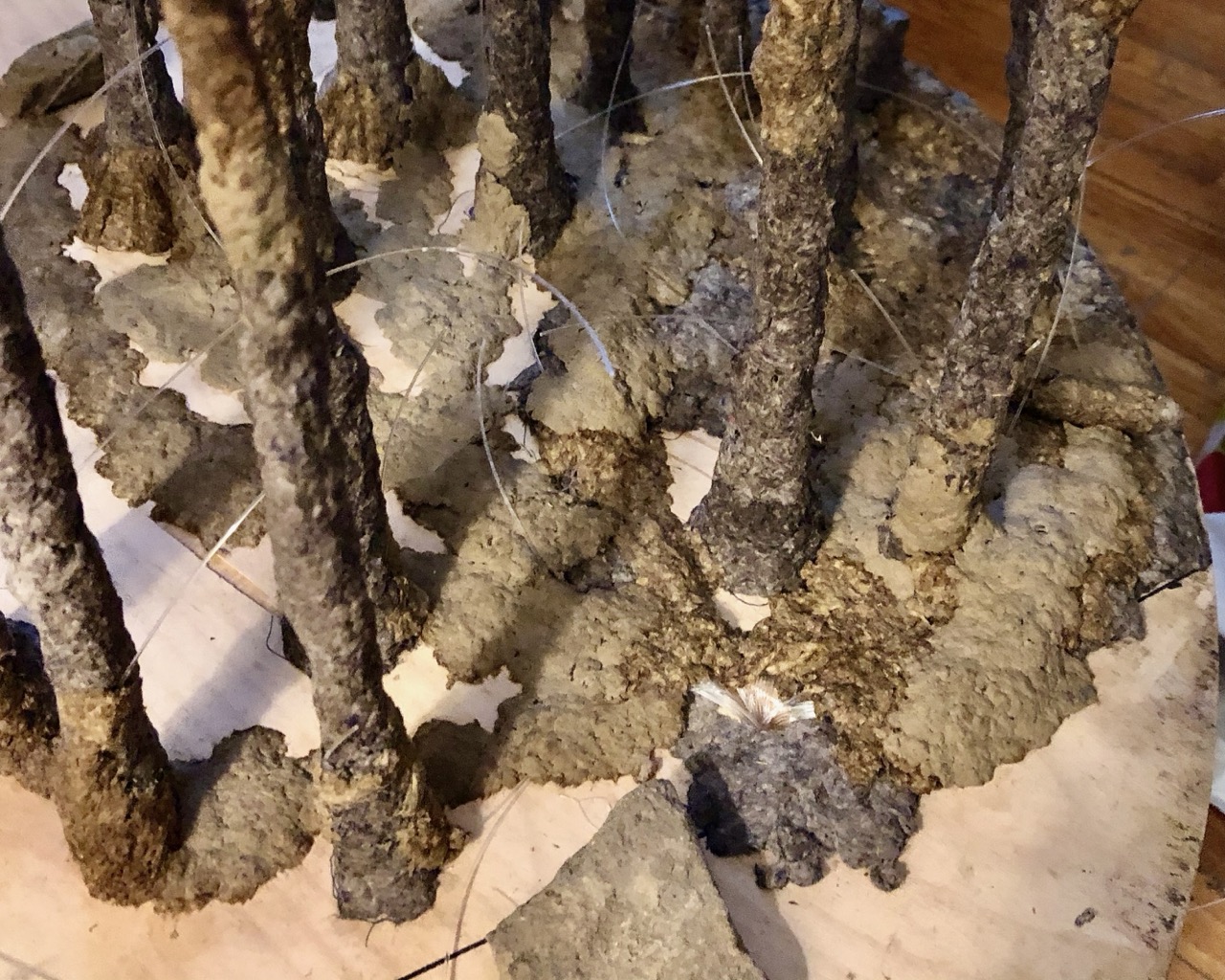
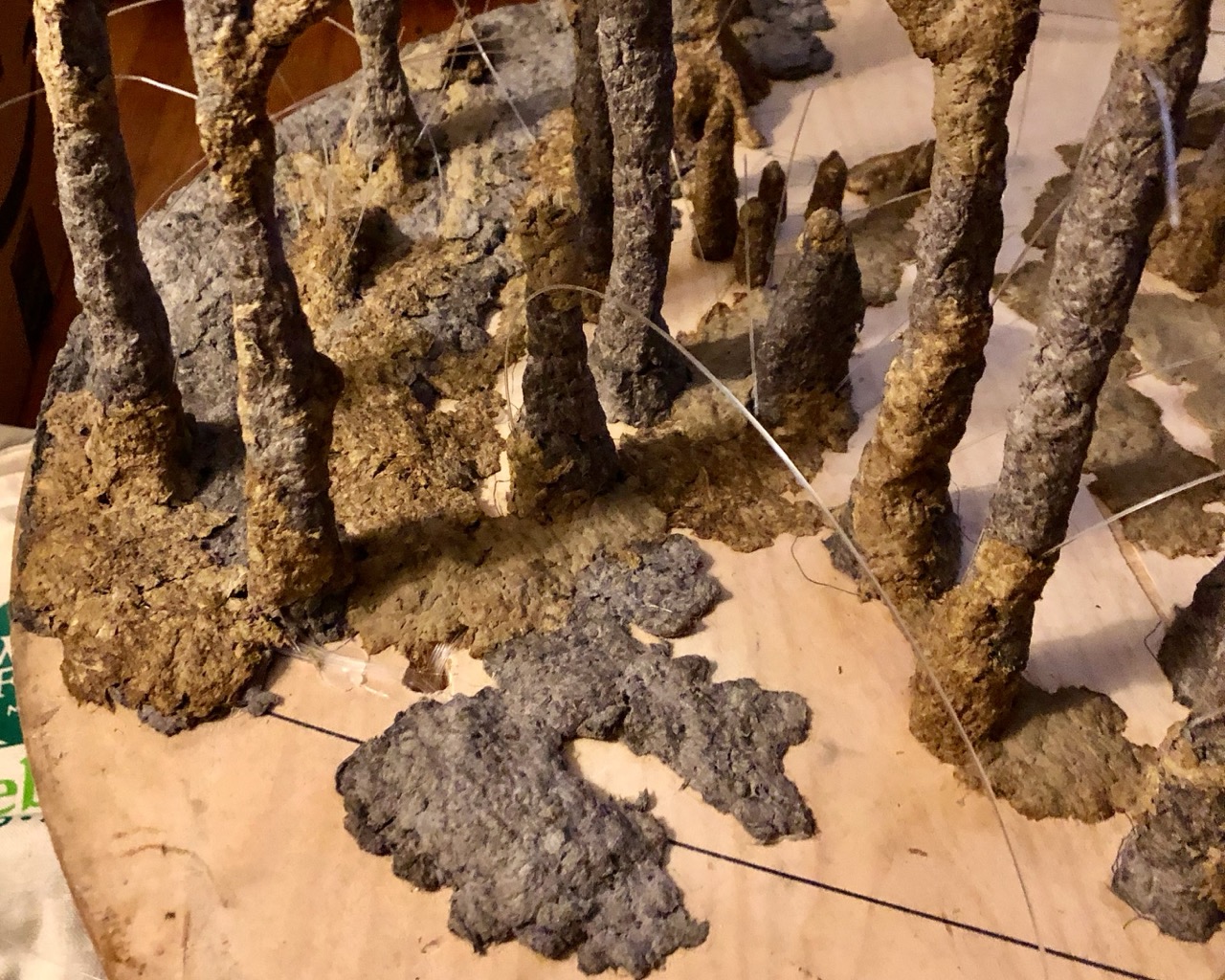
To make fireflies, I embedded fiber optic filaments in the clay layers, and ran them through a hole in the platform to a programmable light under the diorama.
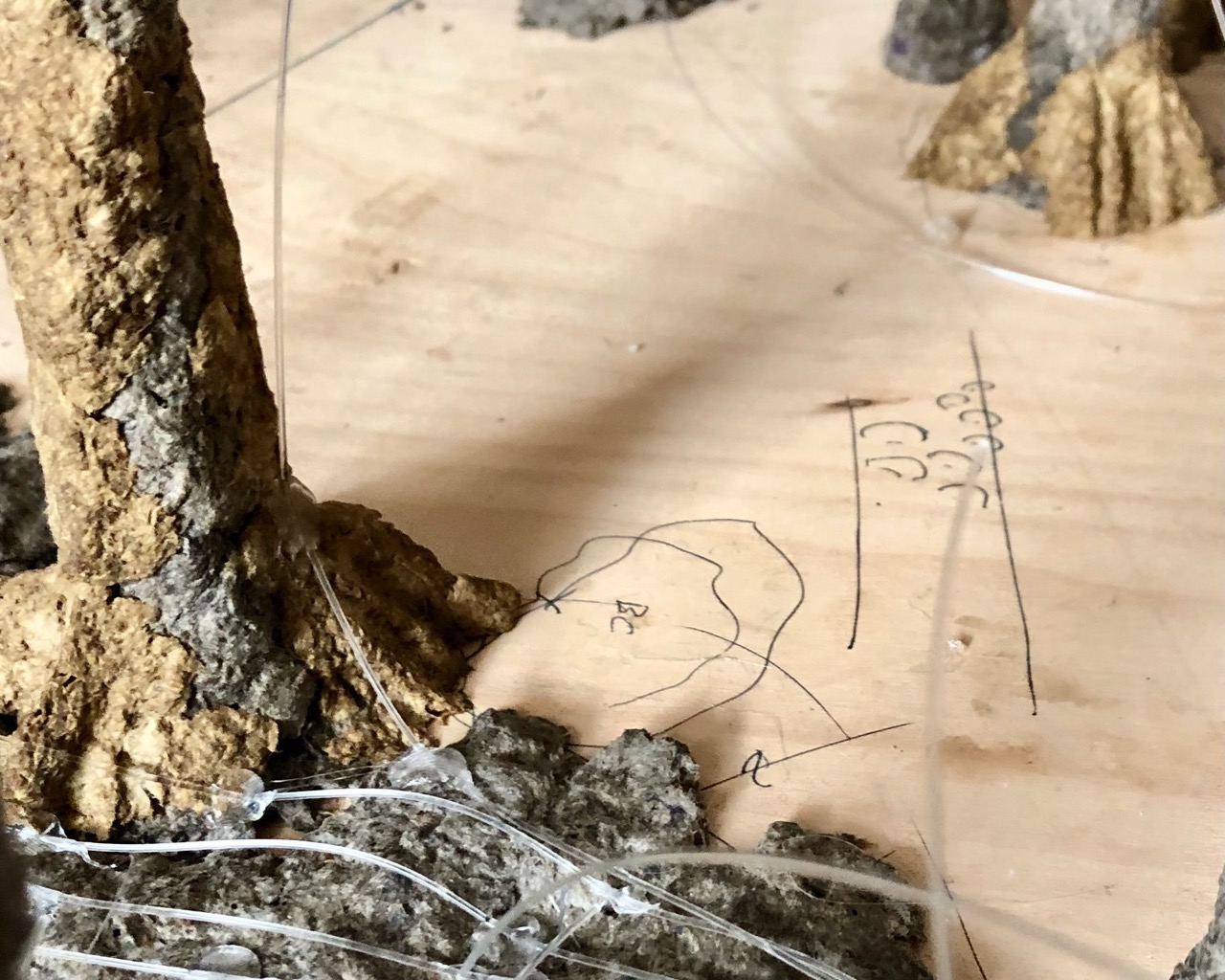
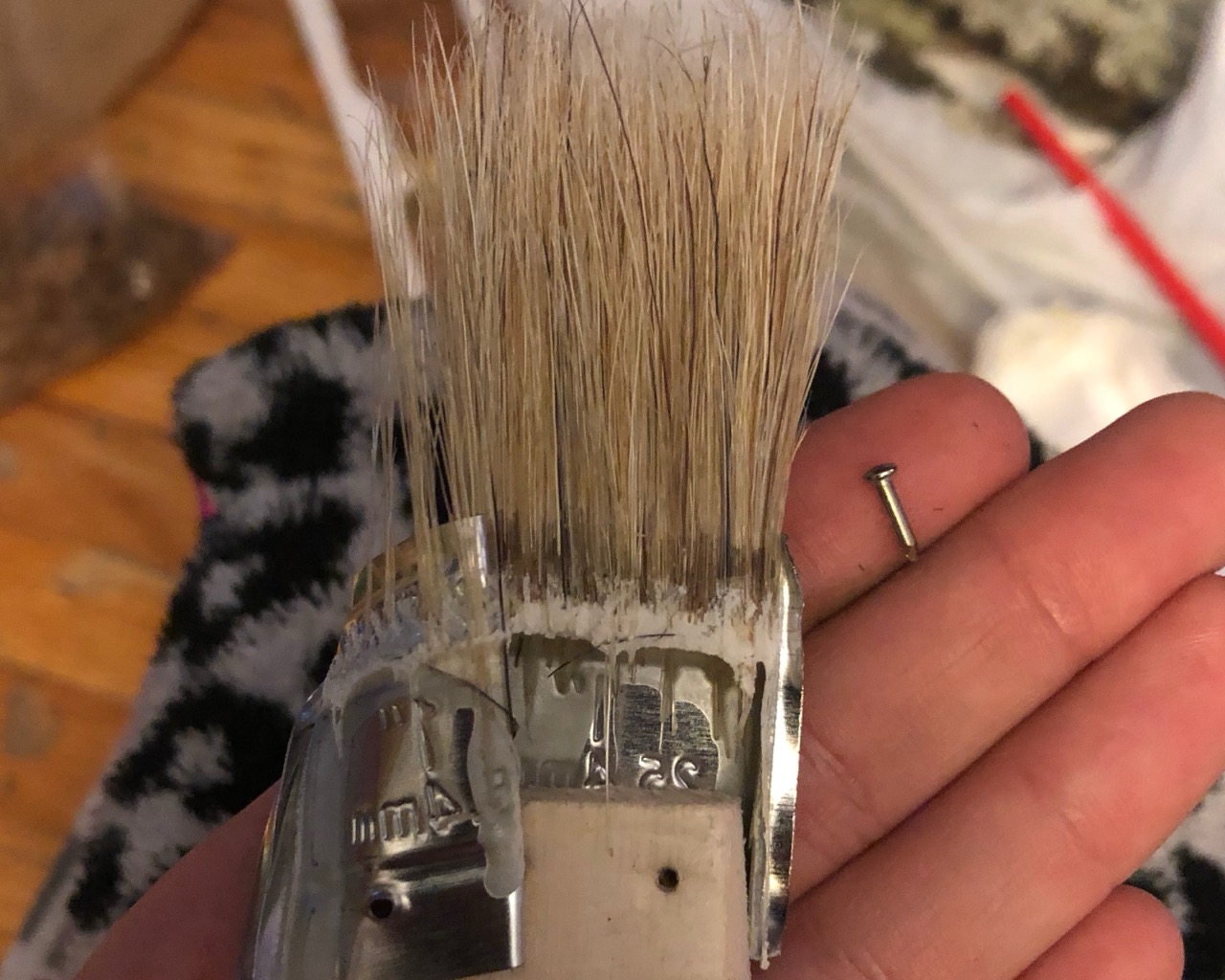
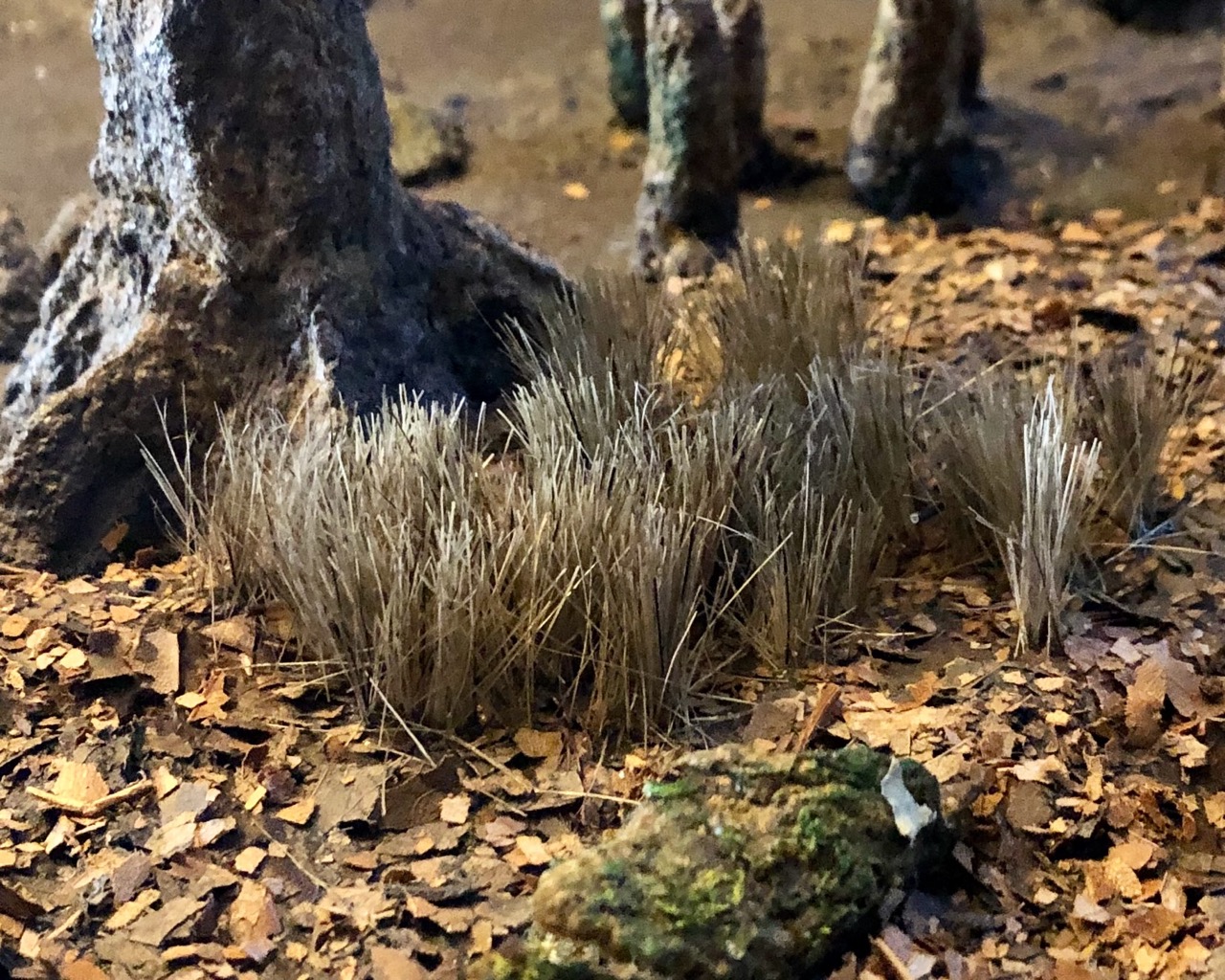
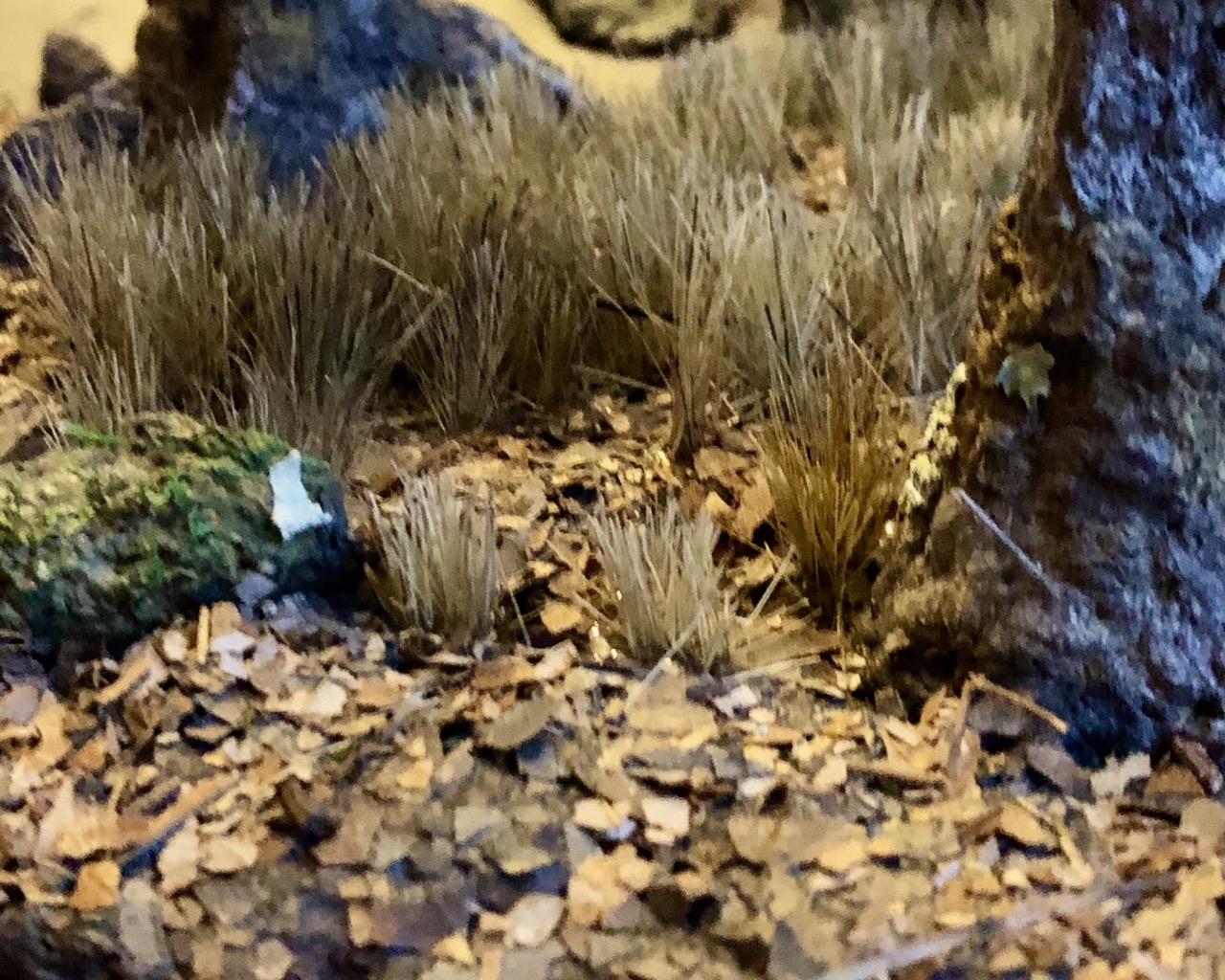
I used fallen leaves, lichen, and stones from the Murfree Spring wetland. I made grasses from chip brush bristles and vines from twine.
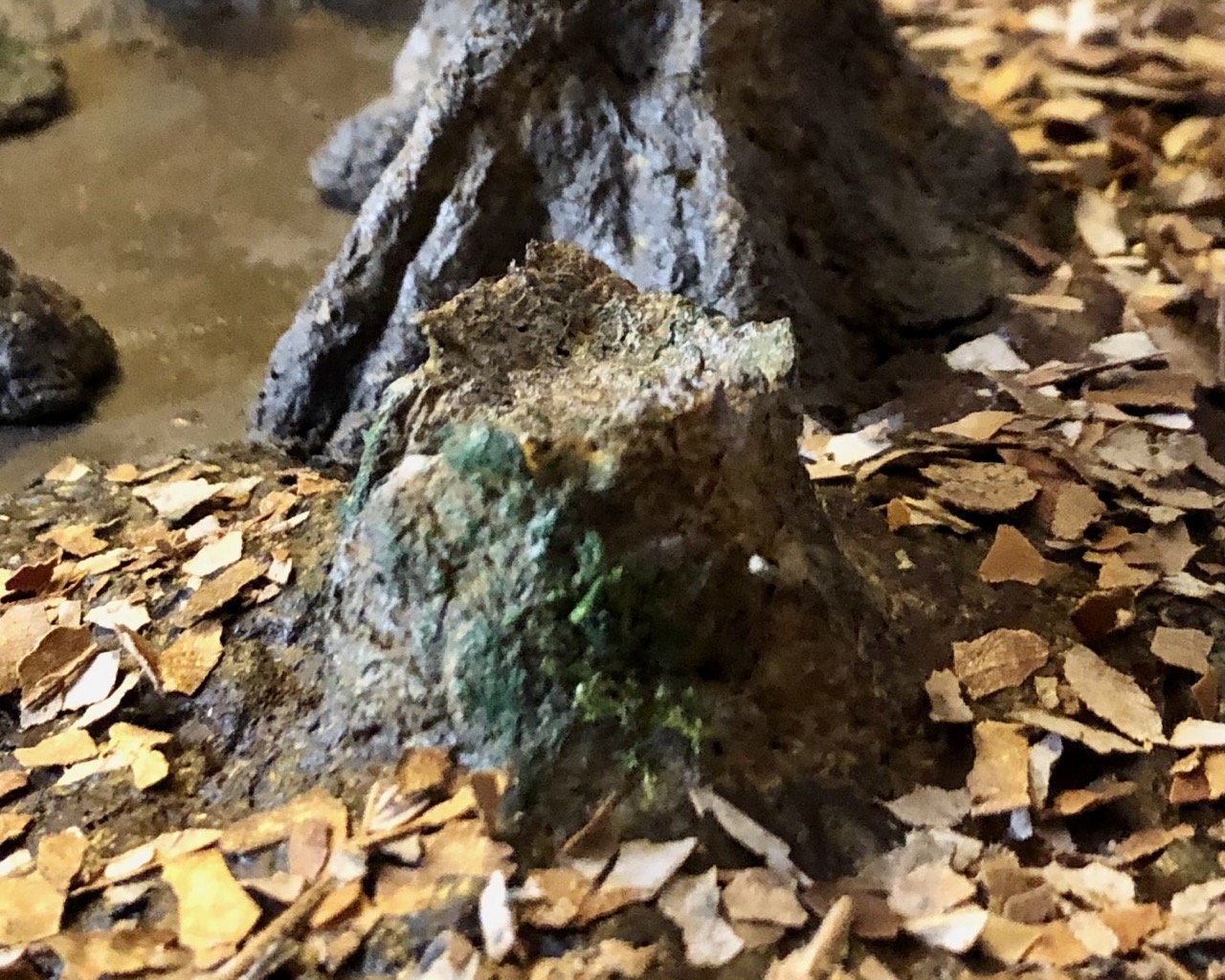
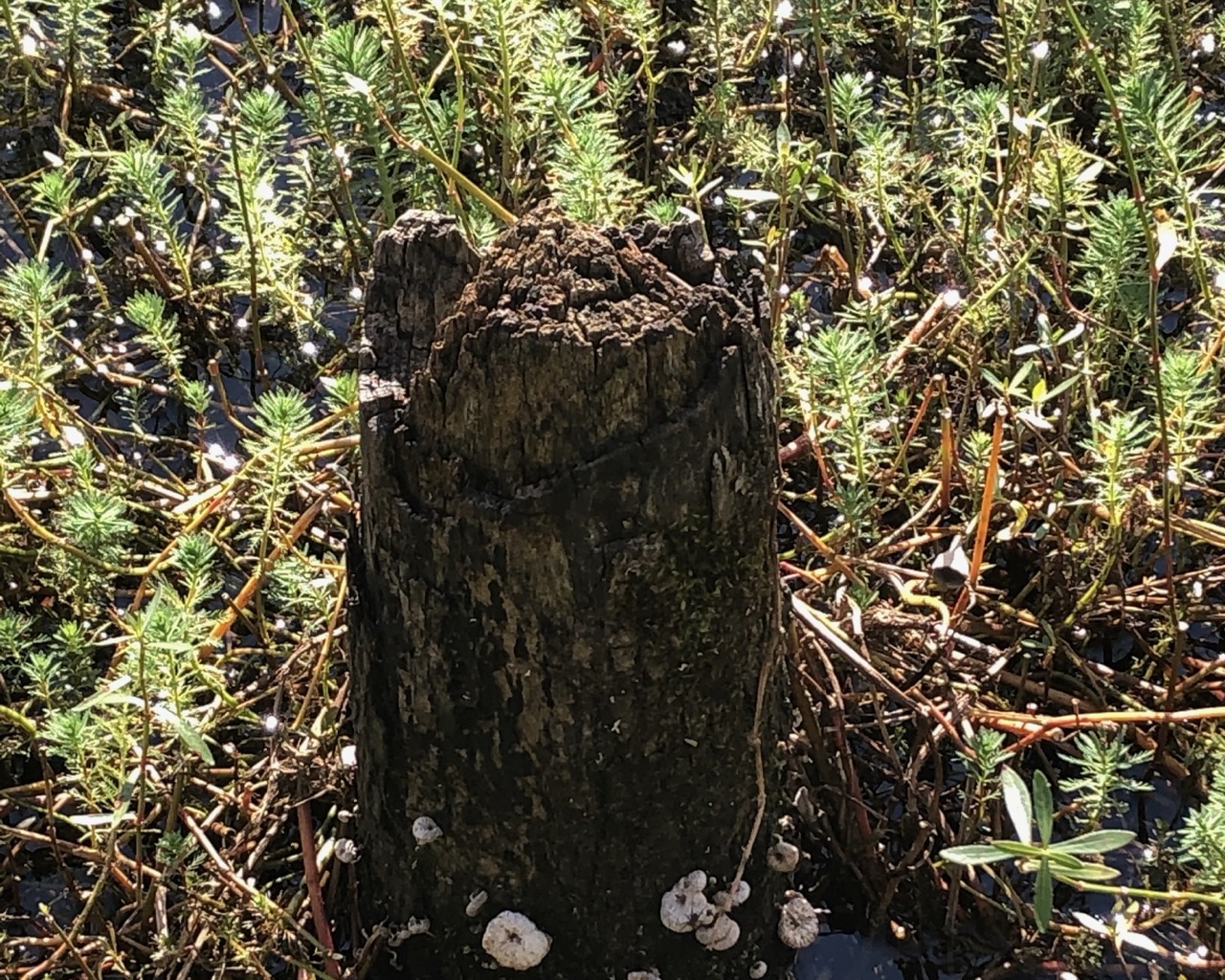
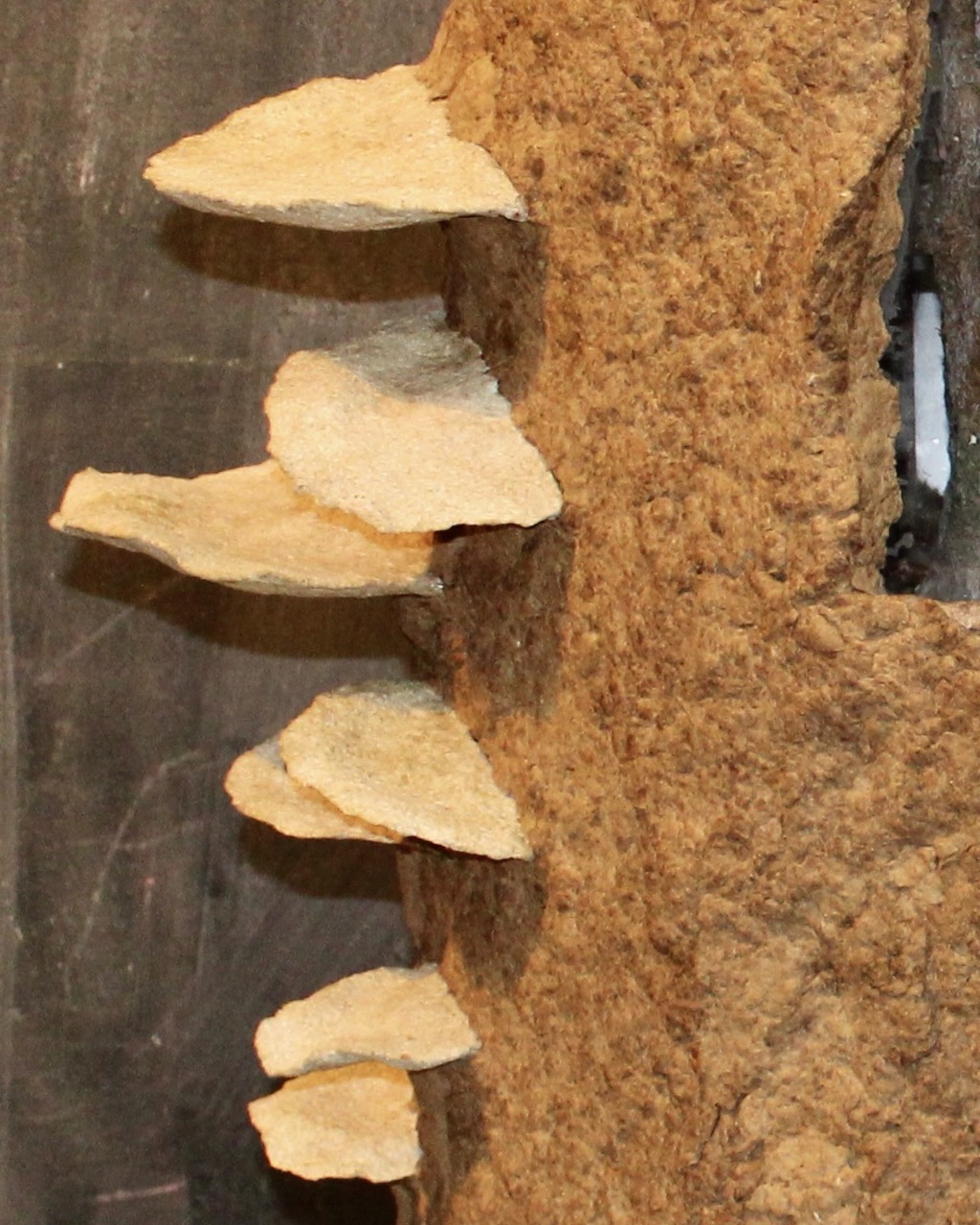
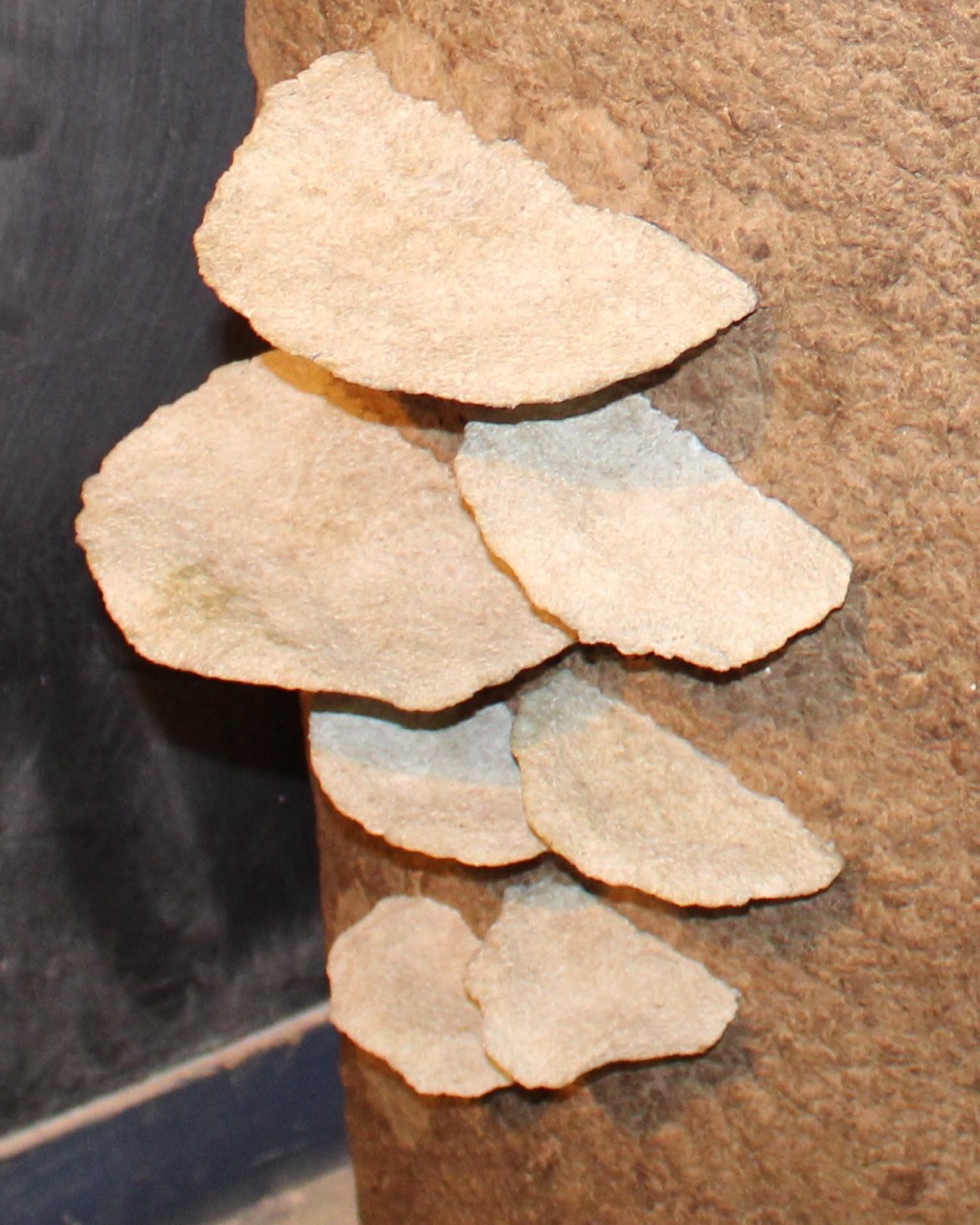
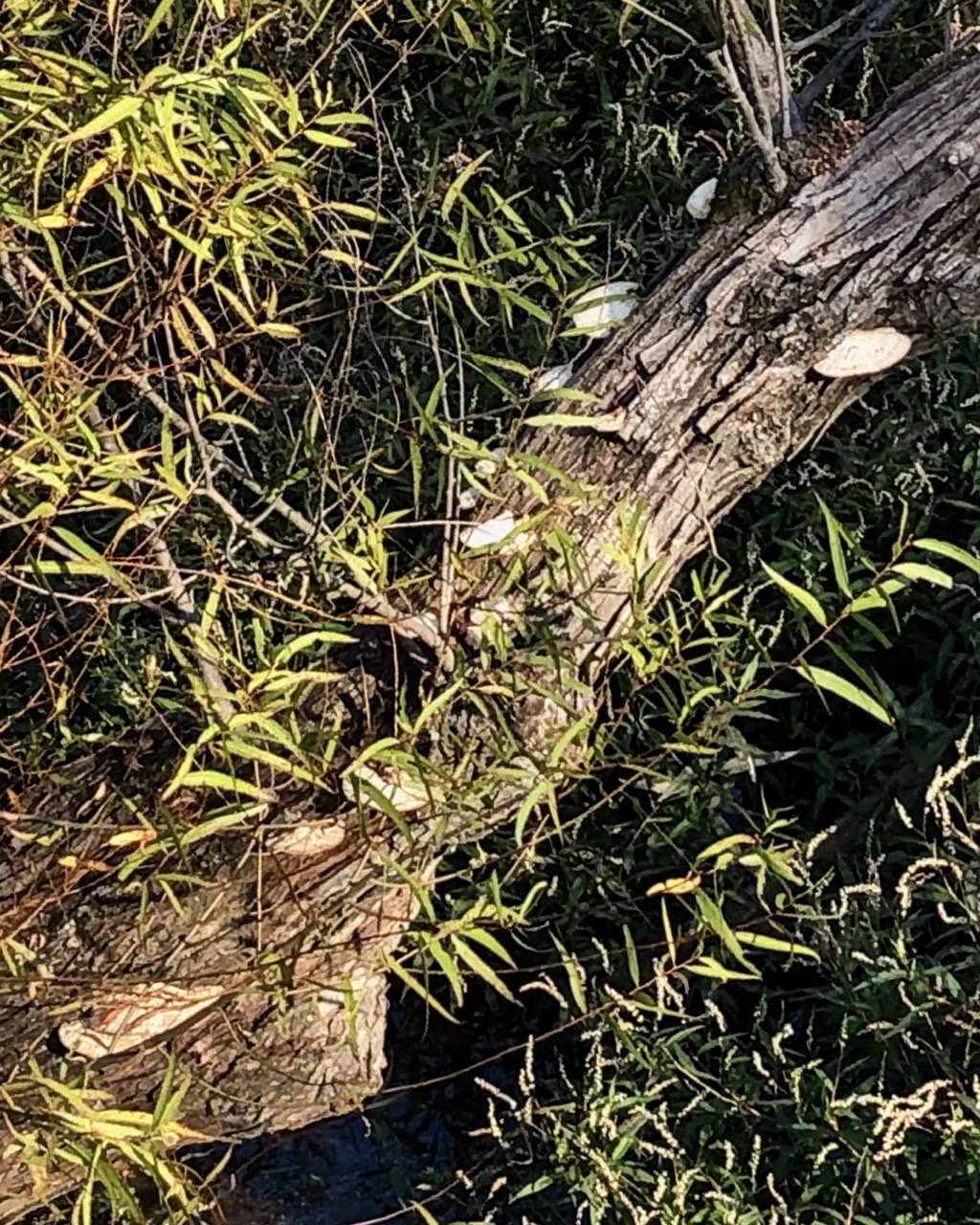
I made life-sized polypores for the exterior tree from wire mesh covered with paper clay. To attach them, I bent the mesh into a lip at the base to staple them to the cardboard cladding before adding the exterior bark.
Nature Walk Highlights
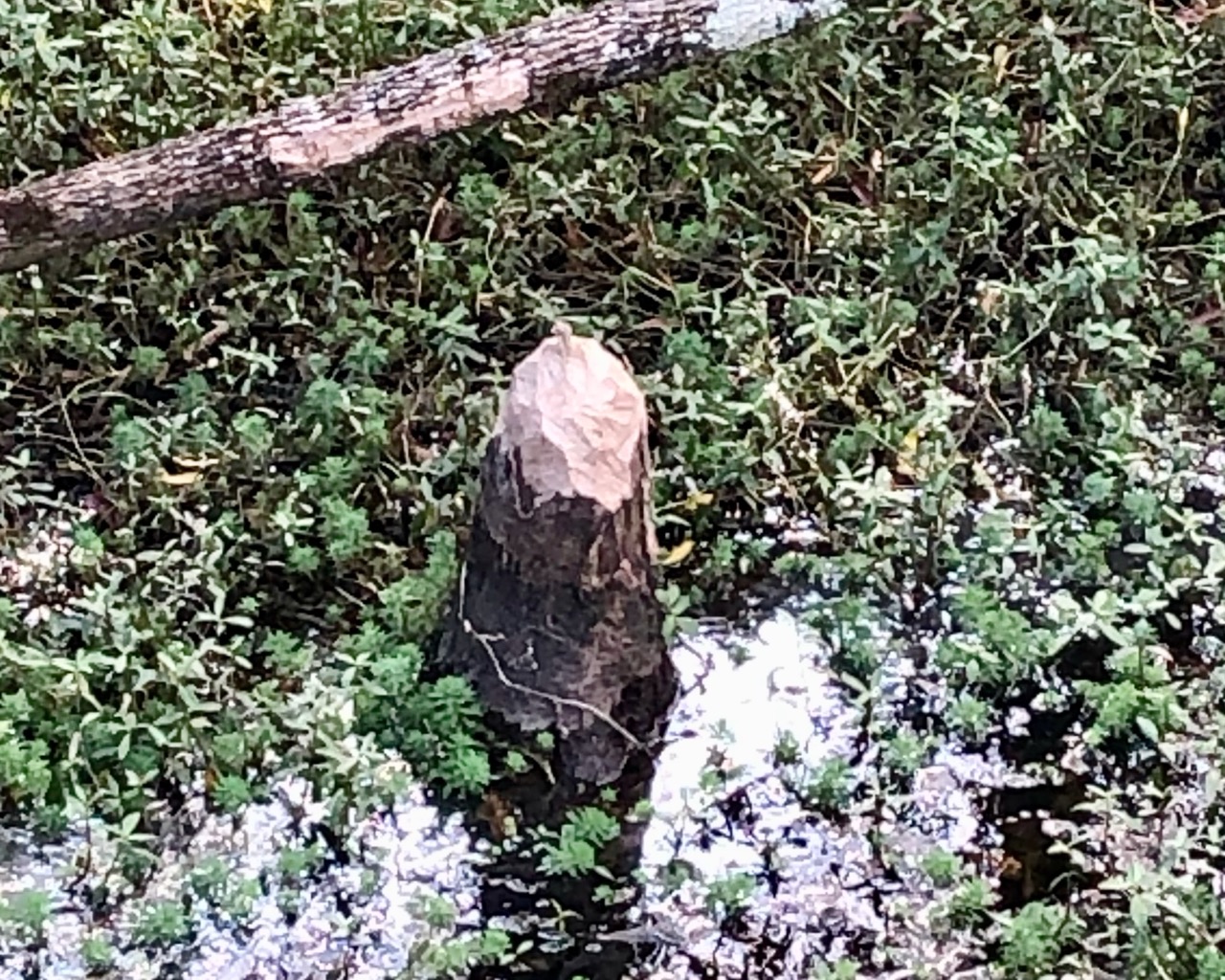
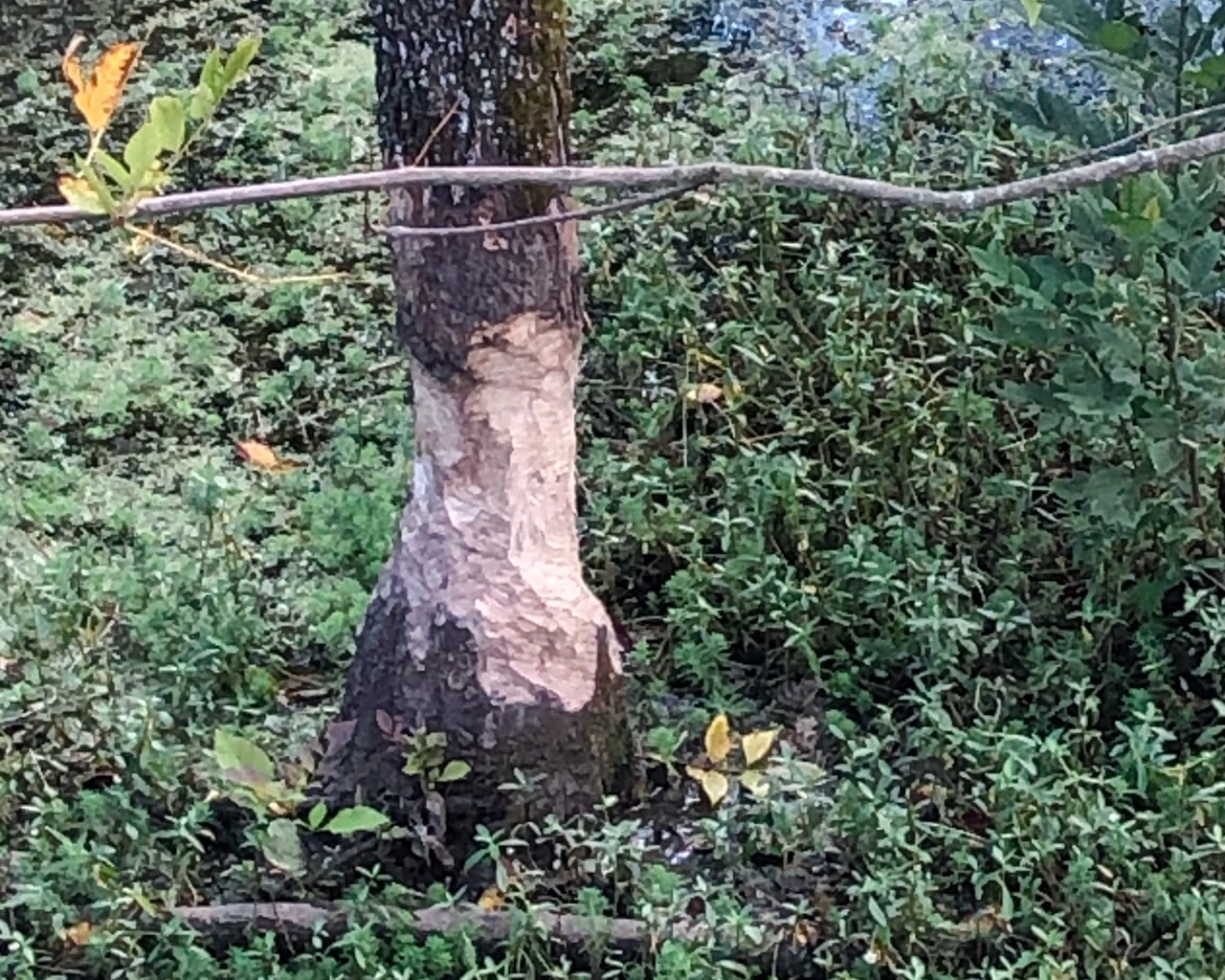
During nature walks at The Discovery Center, educators discuss subjects like how the forest floor forms, how beavers impact trees, the unique roots of Bald Cypresses, and how flood rings can show water level history.
Below are some examples of these subjects from my diorama:
Forest Floor
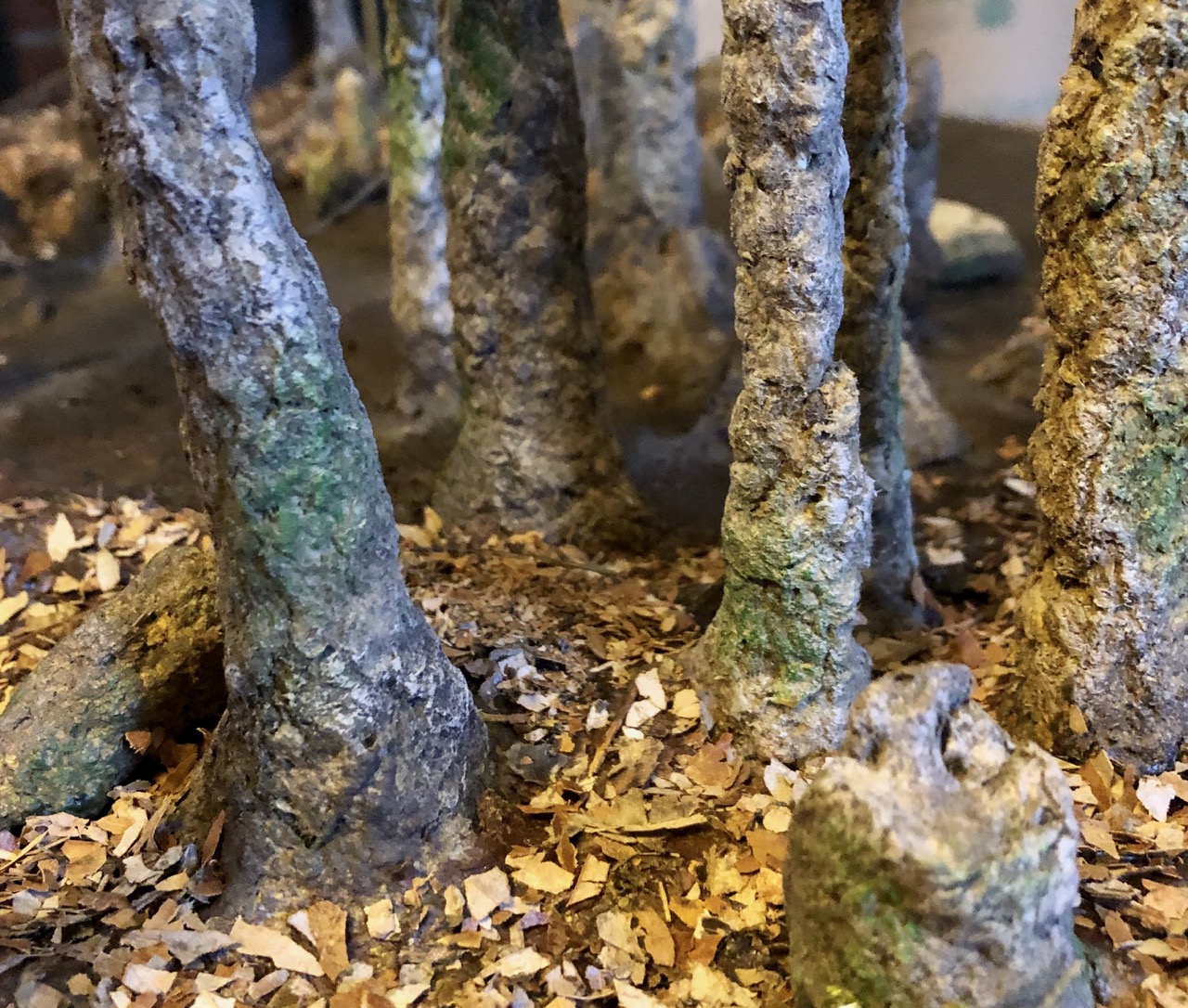
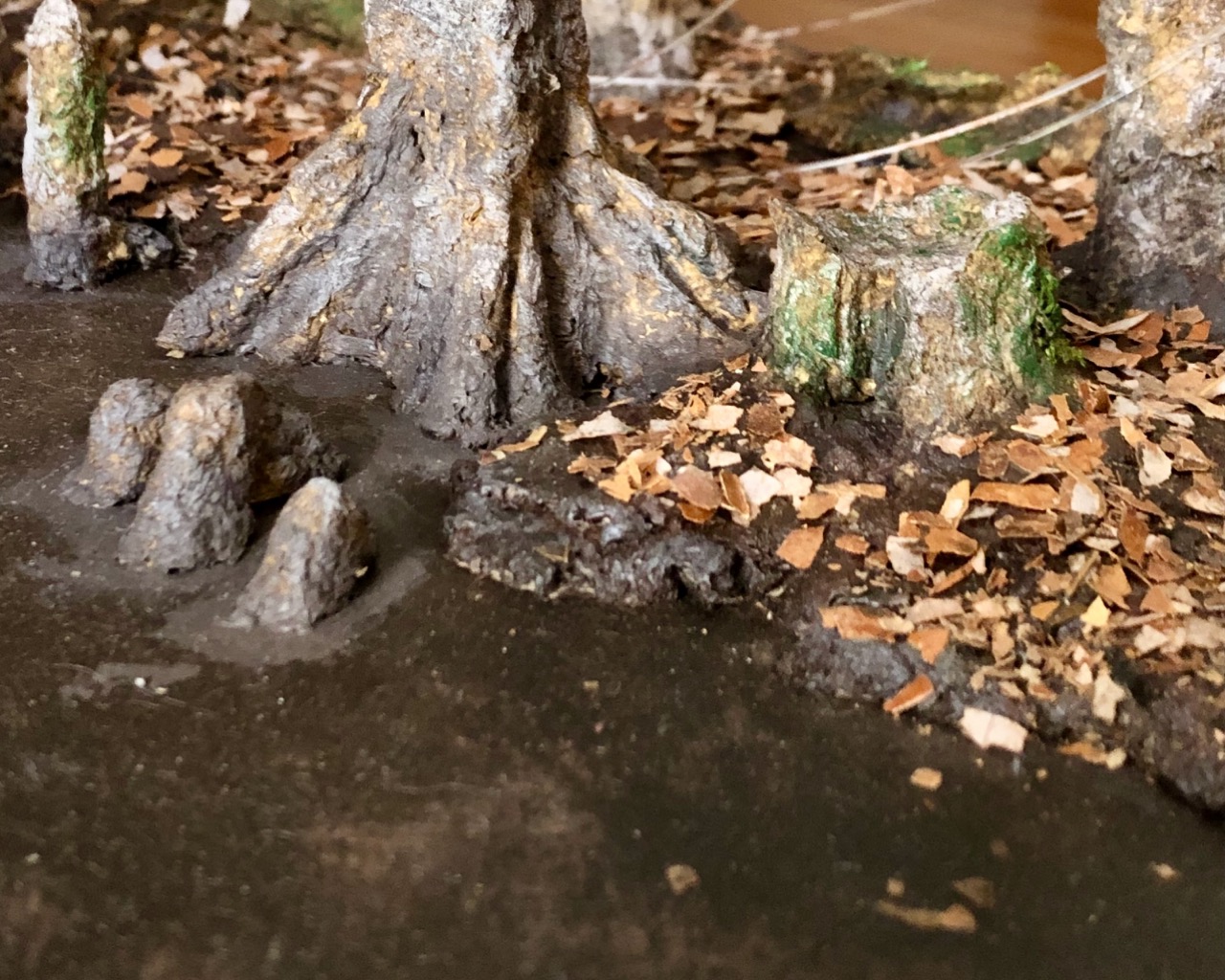
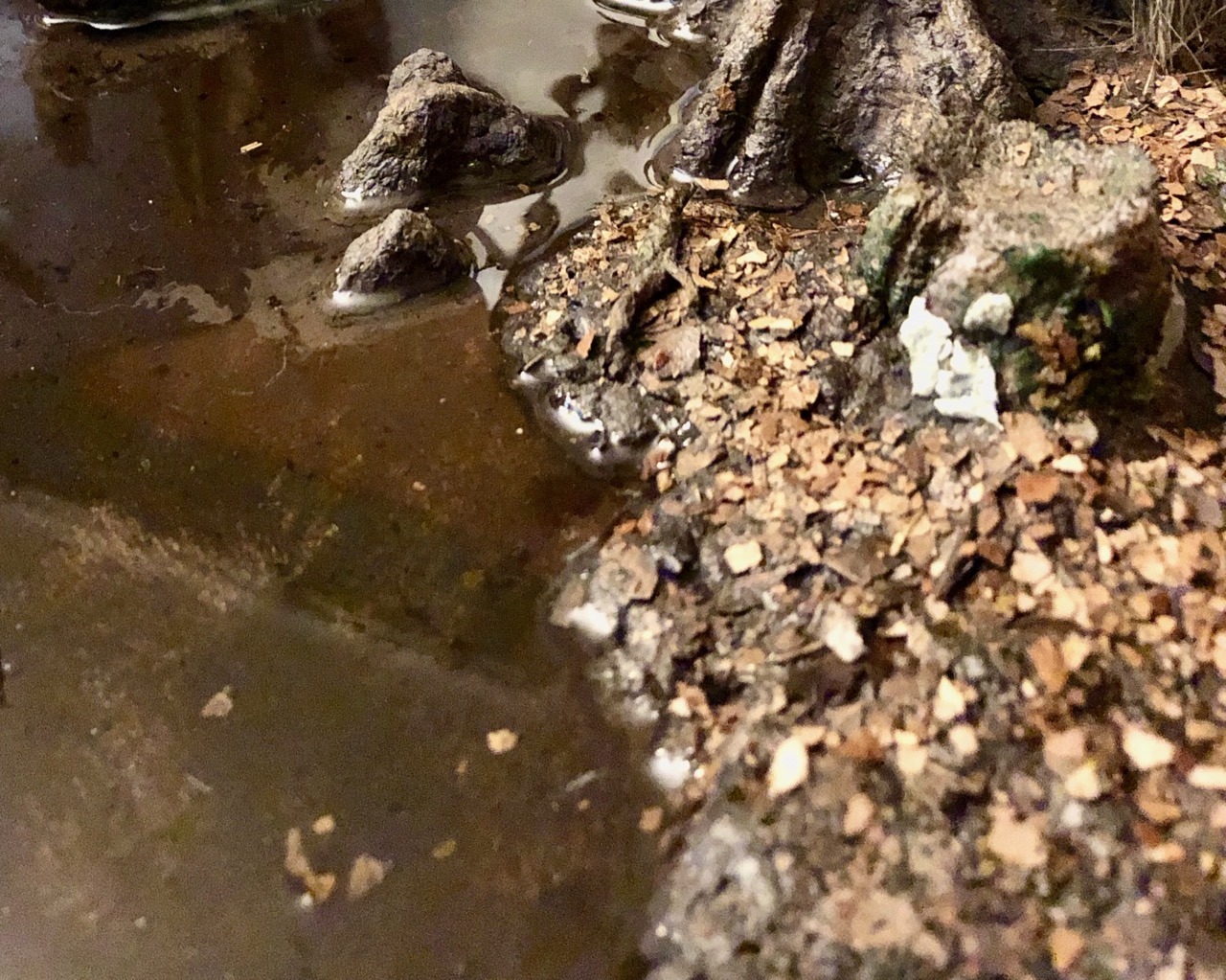
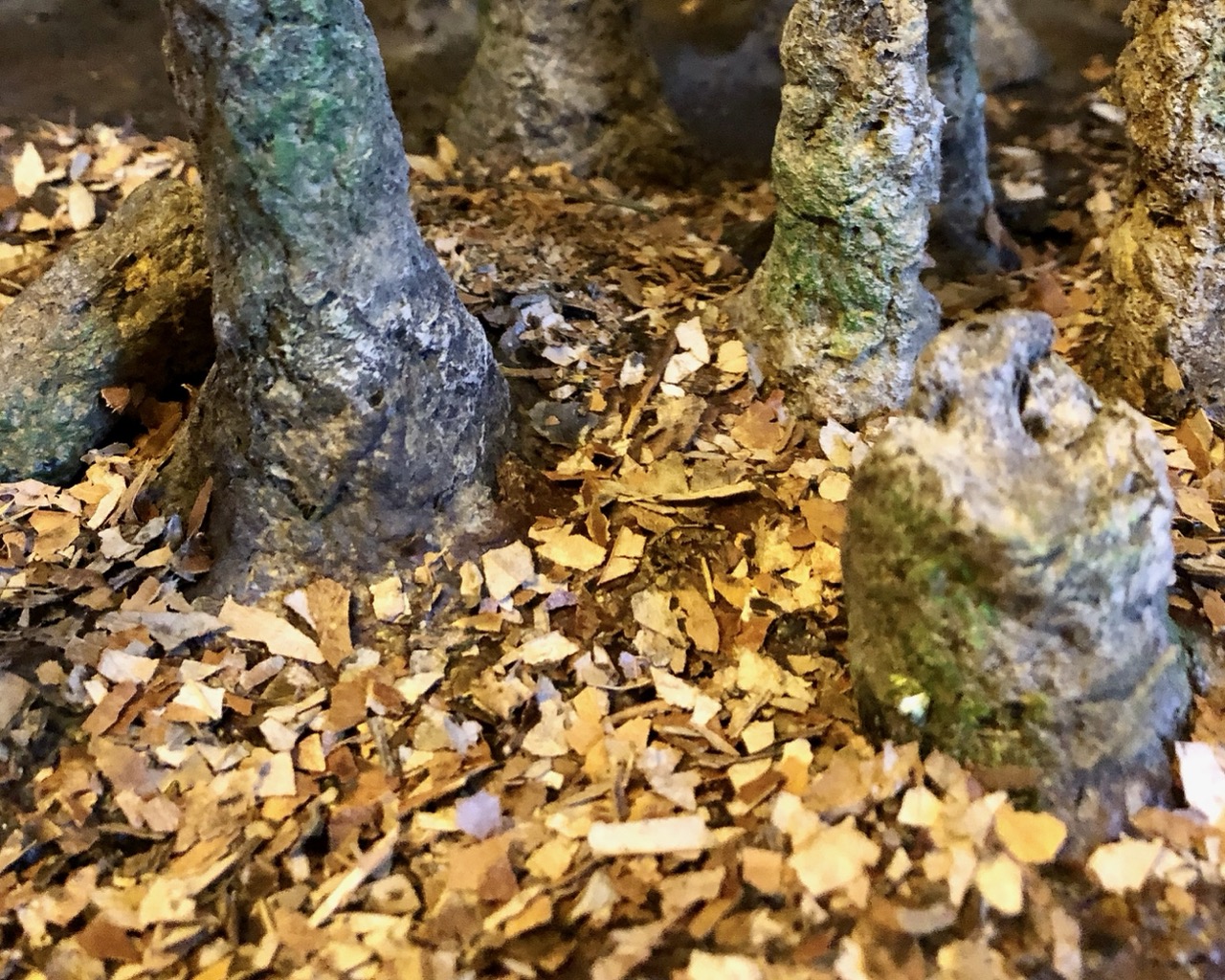
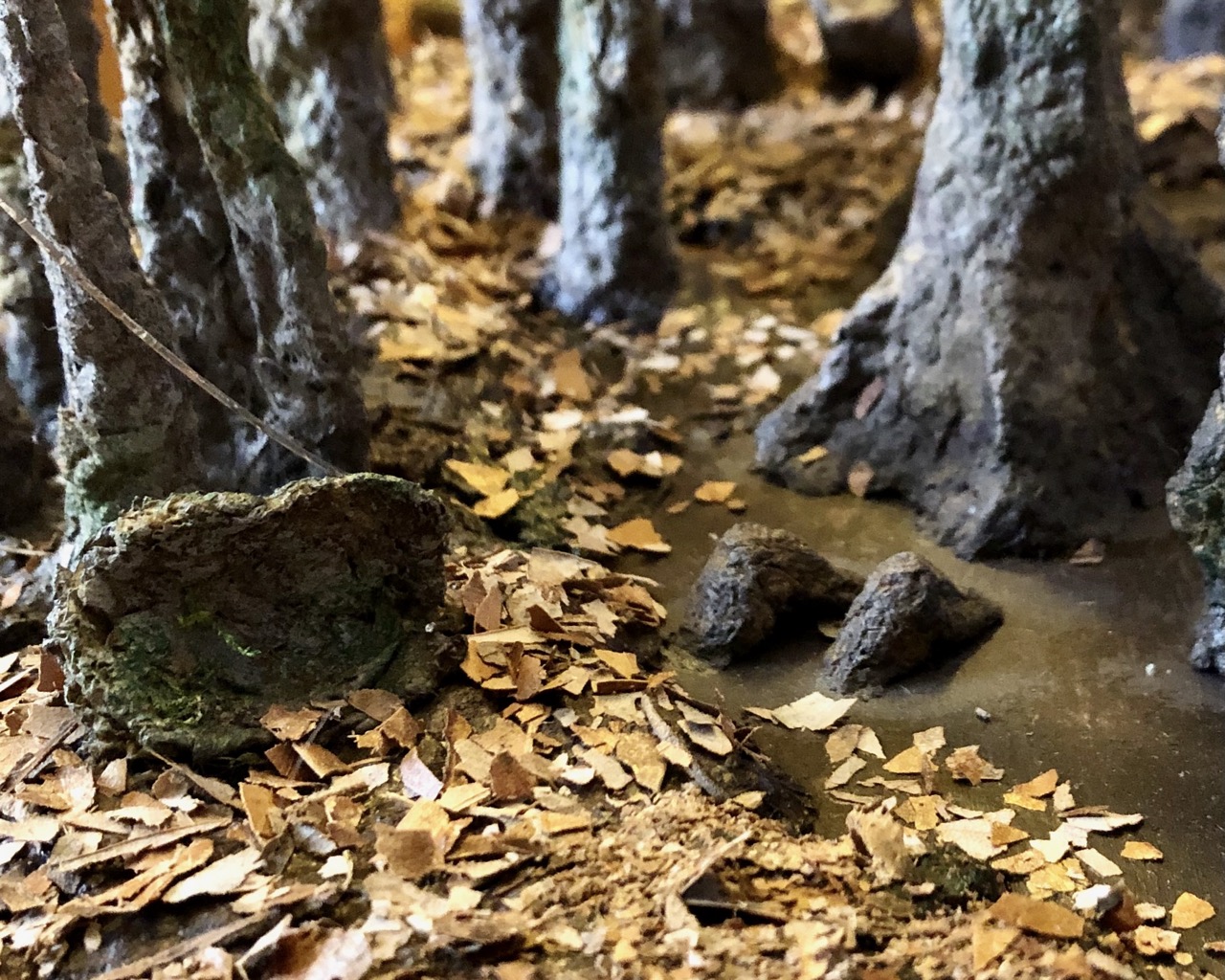
To mimic leaf mat decomposition on the forest floor, I crushed real leaves to scale by hand and applied them in layers. I sealed each layer with thinned PVA I tinted brown, which mimics the leaves decaying into loam. I left the top layer unsealed, preserving the variance of the sheen on the leaves.
Beaver Activity
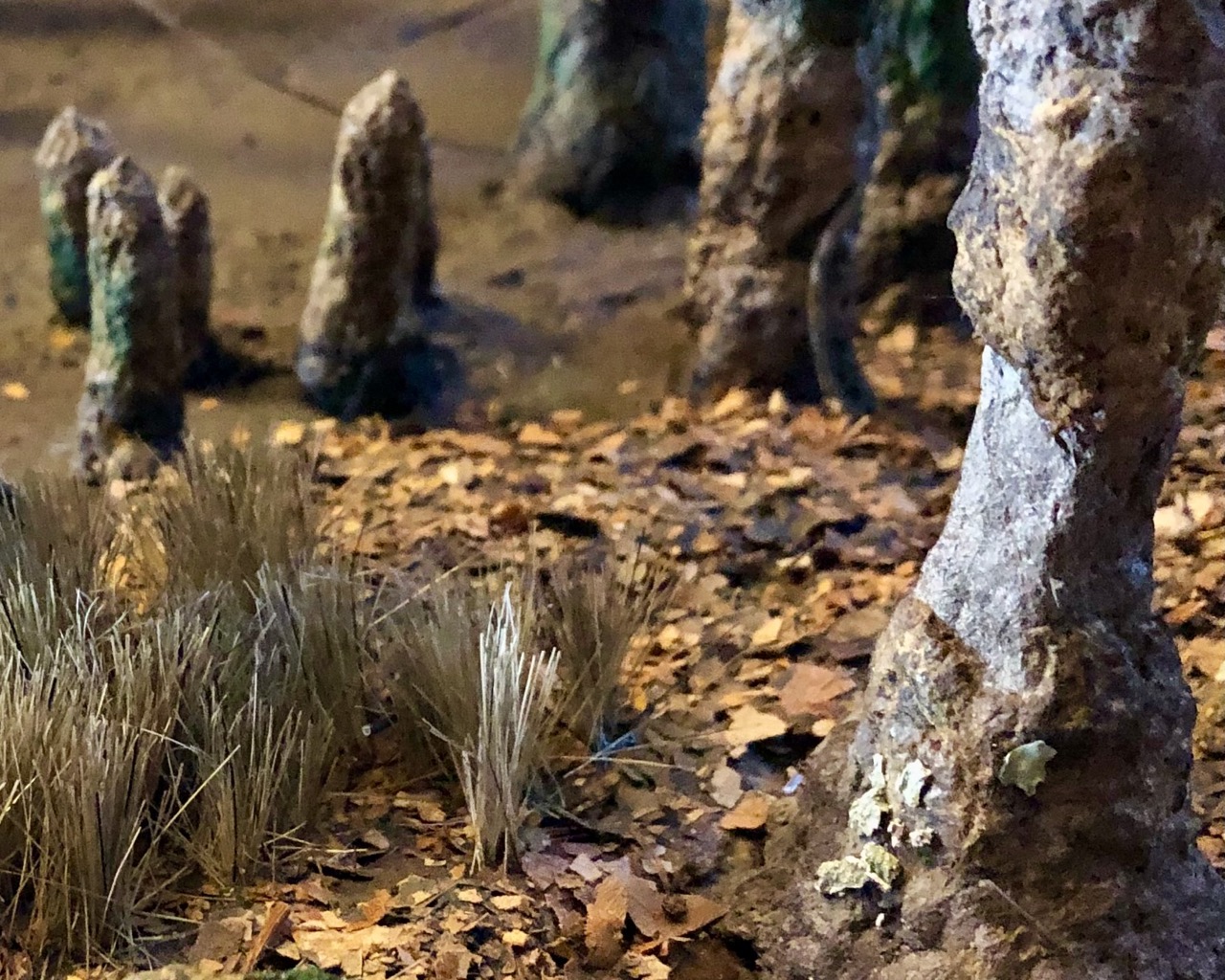
A copse of young trees recently harvested by beavers, and a tree showing callus tissue formation after beavers stripped its bark.
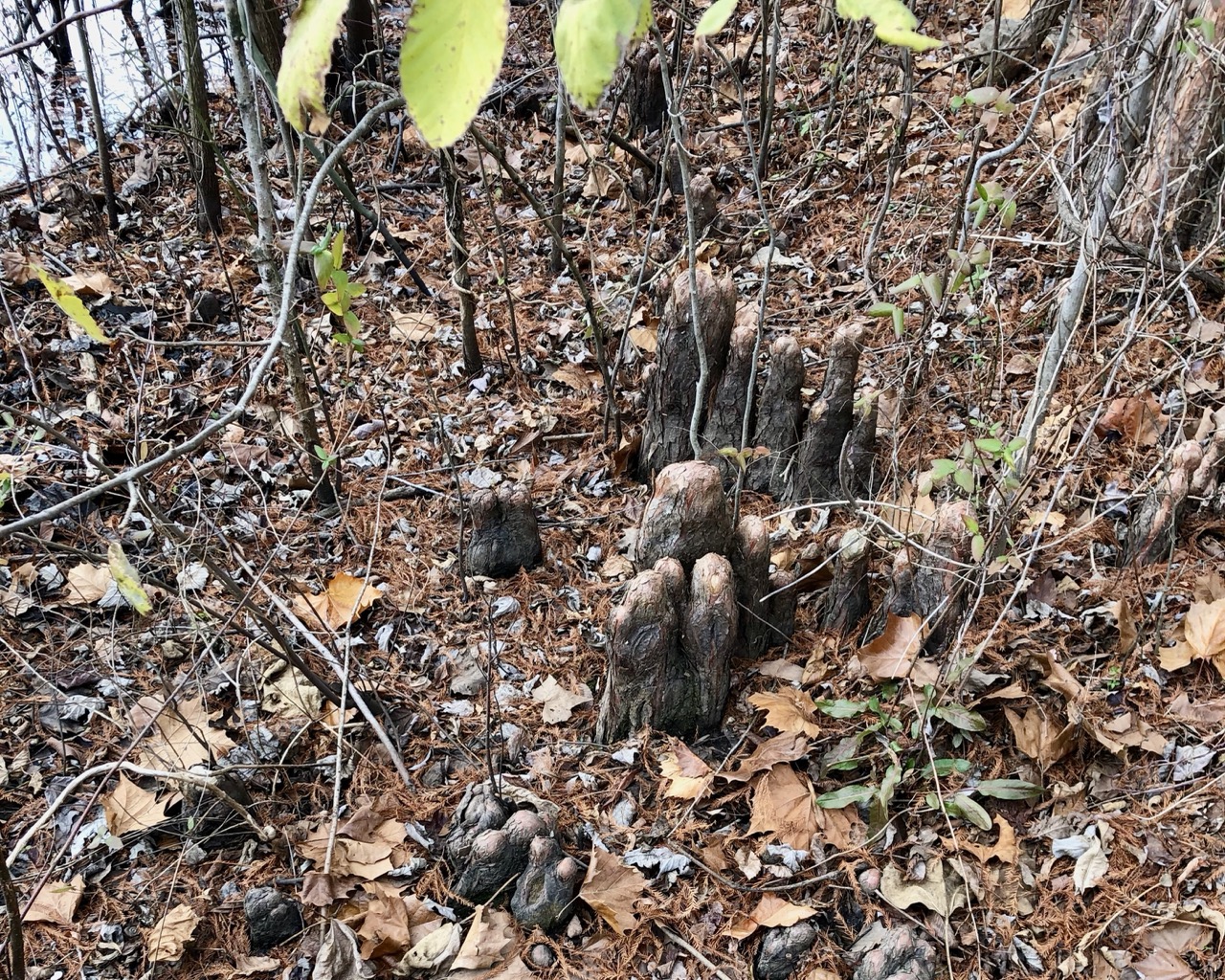
Bald Cypress Knees
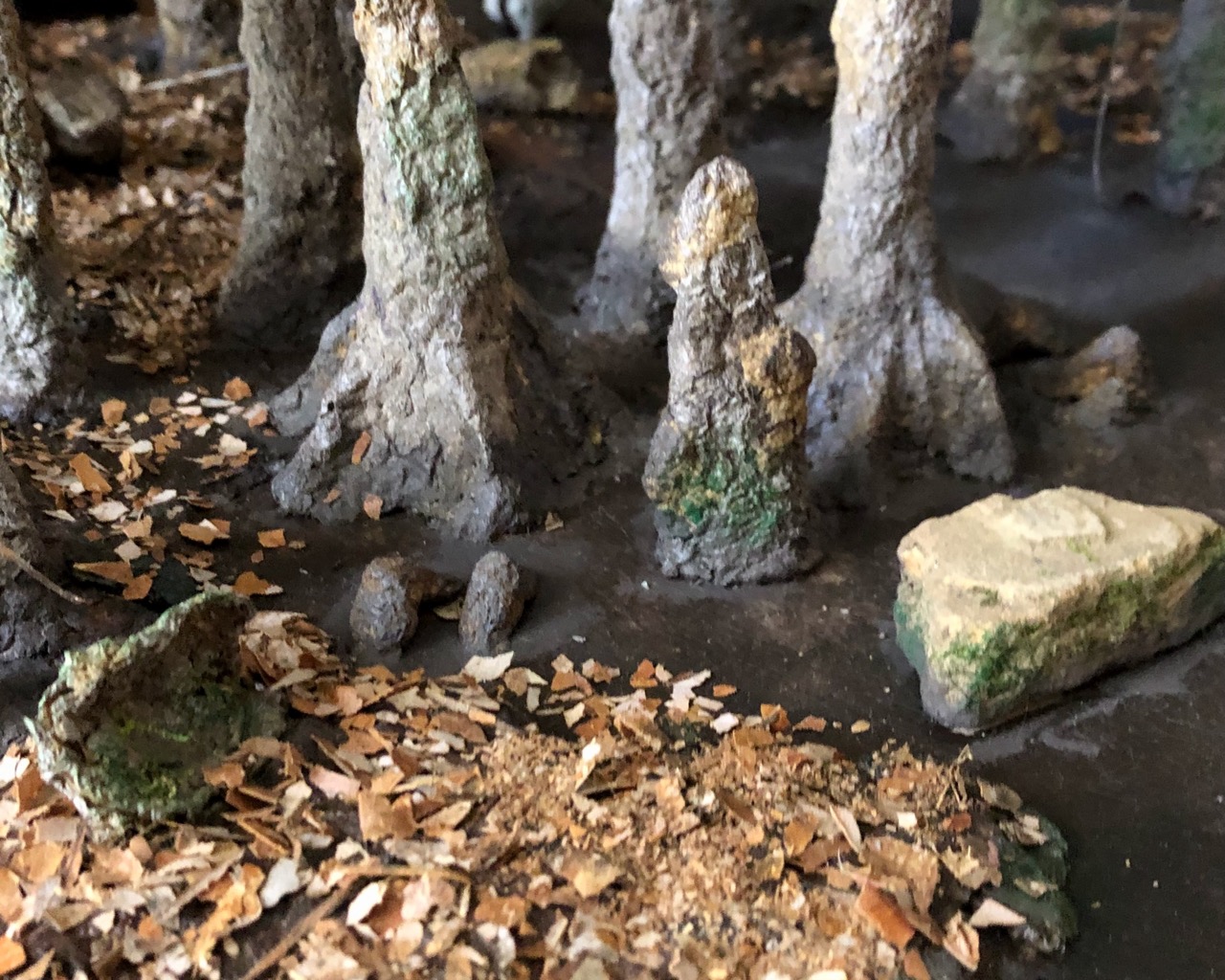
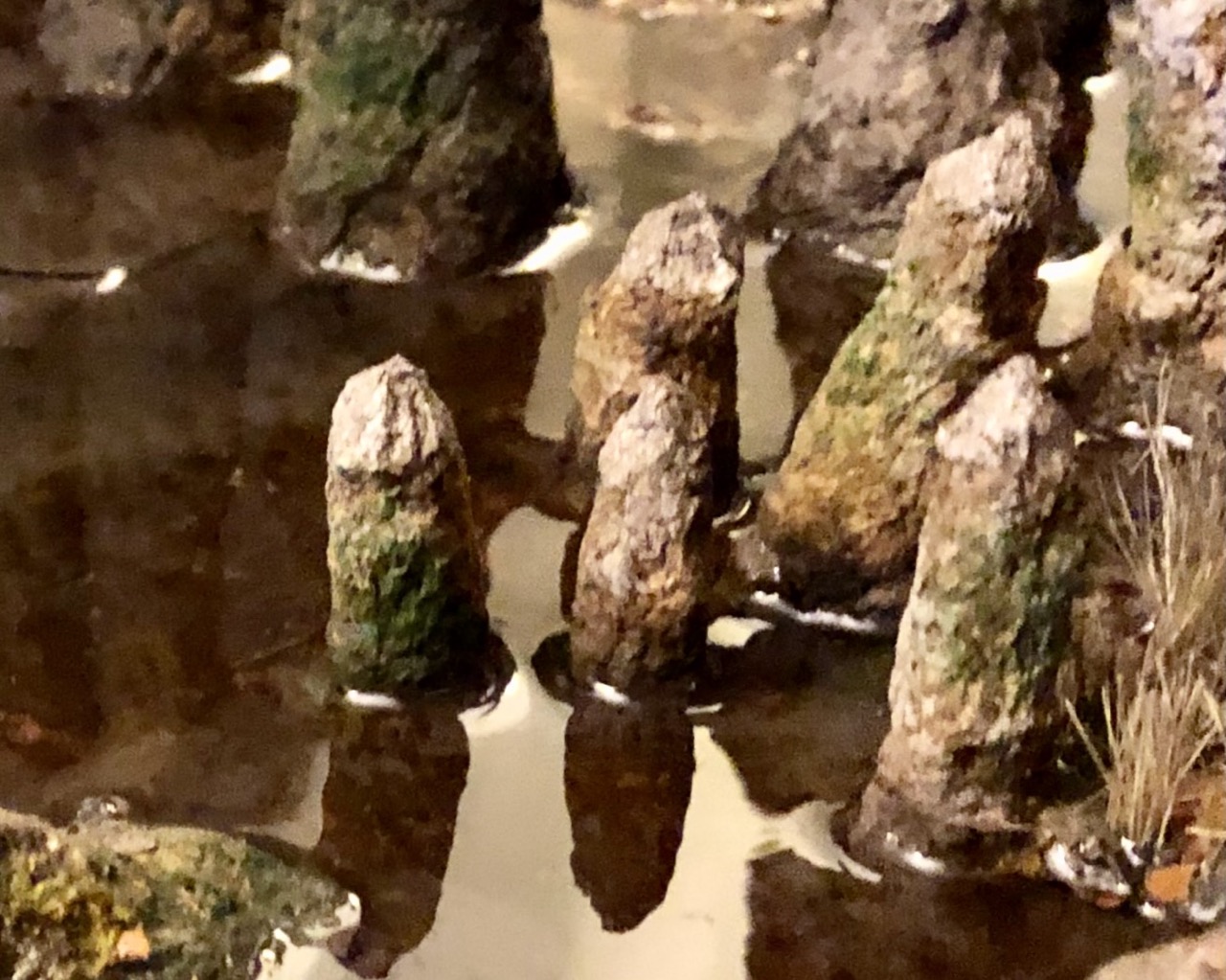
Bald Cypress tree roots grow in a unique form called “knees.”
Flood Rings on Trees
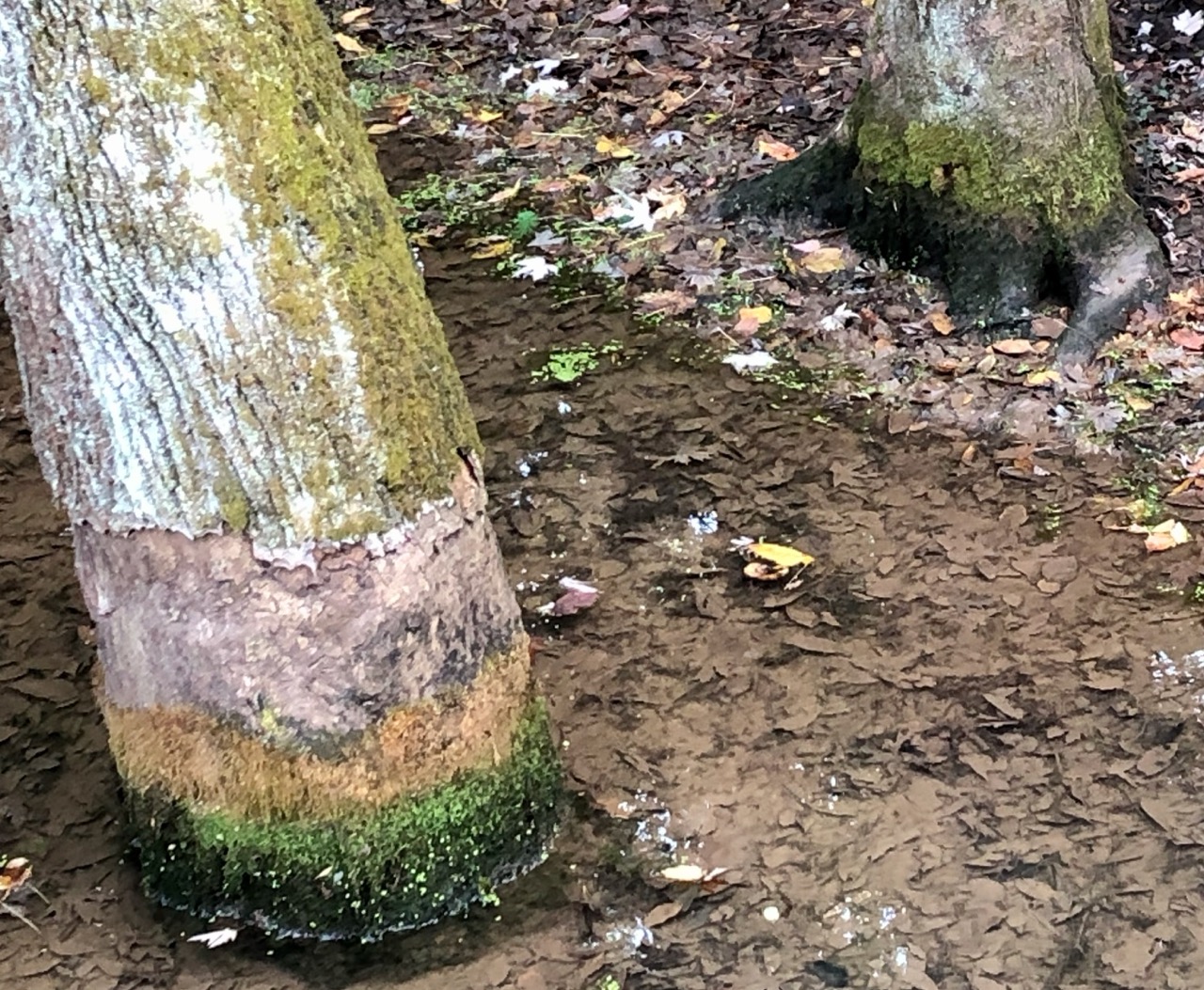
With acrylic paints, I added various levels of algae rings around the trees, marking the history of flooding in the wetland.